Brown-Forman Launches Targeted Marketing to Win Back Customers
Case Type: increase sales; business competition, competitive response.
Consulting Firm: AlixPartners first round full time job interview.
Industry Coverage: alcohol.
Case Interview Question #01048: The client Brown-Forman Corporation is a multi-billion dollar liquor manufacturer began operations over 100 years ago. Currently, it is one of the largest American owned companies in the spirits and wine business. Based in Louisville, Kentucky, it manufactures several well known brands throughout 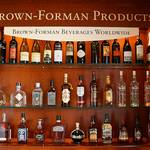 the world, including Jack Daniel’s, Early Times, Old Forester, Woodford Reserve, Canadian Mist, GlenDronach, BenRiach, Glenglassaugh, Finlandia, Herradura, Korbel, and Chambord.As of fiscal year 2015 the company had sales of $3.6 billion.
The client Brown-Forman used to primarily focus on whiskey. Now whiskey accounts for less than 5% of annual sales. In the United States, the overall sales of whiskey were up 1% per year over the last 20 years and our client’s sales have tracked that. Last year, however, overall sales of whiskey were up 2%, while our client’s whiskey sales were down 15%. Why? What should they do?
Possible Answers:
1. Suggested Framework
3C’s
* Company: Sales = Price x Quantity
* Competitors
* Customers
2. Additional Information: (to be given to candidate if requested)
a. Company
* Price: Price has not changed.
* Quantity: They have not sold as much whiskey this year.
* Has anything changed?
– 5 master blenders have implemented a new formula that reduces cost per bottle by $0.25 and have assured management that there is no noticeable impact on taste.
– No changes to packaging.
– No testing of the new formula. Did company do anything differently last year than it did in the previous 20 years?
* Has anyone noticed?
– 20% of one customer segment, “the loyals” that constitutes 5% of all customers but 45% of all sales has noticed and are “extremely angry”
– 20% * 45% = 9% decrease in quantity.
* Also need to consider the bottom line
– Current contribution margin per bottle is $4
– Margin before must have been $3.75
– Before: 100 * $3.75 = $375
– After: 91 * $4 = $364
– Conclusion: Change in formula hurt sales and profits!
b. Customers
The U.S. whiskey market is divided into high end, middle segment, and low end whiskies. Our client Brown-Forman competes in the middle segment.
At new whiskey bars, people will buy high end whisky to drink straight, but are satisfied with low end whisky for mixed drinks. Last year sales in the high end and low end whisky segments grew, but sales in the middle segment declined by 4%.
c. Competitors
* Our client’s main competitor lowered their price from $12 a bottle to $11 a bottle last year.
* Our client only has one competitor in the middle segment and they split the market 50/50. (Use 100 as a base — each player sold 50 bottles of whiskey)
* Last year, our client’s sales decreased by 15% and the overall “middle segment” sales decreased by 4% in size:
– 15% * 50 = 7.5 decrease in our sales: from 50 to 42.5
– 4% * 100 = 4 decrease in “middle segment” sales: from 100 to 96
– 96 – 42.5 = 53.5 current sales for our competitor: increase from 50 to 53.5
– Major competitor increased their sales by 7% in absolute terms.
– 53.5/96 = 55.7%. Their market share increased by 5.7% to 55.7%.
– 42.5/96 = 44.3%. Our client’s market share dropped by 5.7% to 44.3%.
3. Solution
What should the client do?
* Change the formula back to appease the angry loyals.
* Do targeted marketing to these loyals to let them know. This might be difficult, but will be necessary in order to move the whiskey upmarket.
* Also, the company could reposition their whiskey as a more premium product. They should not answer the price cut of its competitor with one of their own. Plus, cutting price to regain market share would reduce profits even further:
Now: 42.5 * $4 = $170
After: (42.5 + 2% * 50) * $3 = $130.5
This is intuitive: we would be cutting out margin by 25% to achieve an approximately 2% increase in sales! The key for our client going forward, then, is better marketing, which makes the brand relevant in a changing market.
Sample Interview Transcript
Interviewer: Why? What should they do?
Candidate: Did the client company do anything differently last year than it did in the previous 20 years?
Interviewer: Well, price has not changed. But, 5 guys, master blenders, implemented a new formula that reduces cost per bottle by $0.25. There were no changes to packaging and no testing of new formula, but they assured management that there was no noticeable impact on taste. However, 20% of one customer segment, the “loyals,” that constitutes 5% of all customers but 45% of sales, have noticed the change and are “extremely angry.”
Candidate: 0.20 * 0.45 = 0.09
So, if angry loyals have stopped purchasing our whisky, sales will have decreased by 9% (since price has remained constant). But, before we can say that this was a harmful move for the company, we must look at the bottom line, profits.
Interviewer: Okay, the current contribution margin per bottle is $4.
Candidate: So, the margin before must have been $4 – $0.25 = $3.75, all other things equal. If we sold 100 bottles before, we sold only 100 * (1-9%) = 91 bottles last year.
Before: 100 * $3.75 = $375
After: 91 * $4 = $364
Therefore, the change in the formula has not only hurt sales, but also hurt profits.
But, the remaining 6% drop remains unaccounted for. Do we know if the market for whisky has changed in the last year? For example, I know that with the rise of cigar bars that whisky has become more hip recently. Is our client’s whisky targeted to this customer segment?
Interviewer: Actually, it is not. The whisky market is divided into high end, middle segment, and low end whiskies. Our client competes in the middle segment. It turns out that at these whisky bars, people will buy high end whisky to drink straight, but are satisfied with low end whisky for mixed drinks. Last year sales in the high end and low end whisky segments grew, but sales in the middle segment declined. What does this table with market information tell you?
Candidate: Well, it looks like sales in the middle segment, where our client competes, declined by 4%. I am puzzled, though, 2% of decrease remains unaccounted for, assuming our market share has not declined. In terms of the competition, have they done anything that might have resulted in our loss of market share?
Interviewer: Maybe, what could they have done?
Candidate: They could have launched a new advertising campaign? No. They could have increased their penetration in retail distribution? No. Hmmm…they could have lowered their price?
Interviewer: Bingo. In fact, our client’s competitor lowered their price from $12 a bottle to $11 a bottle last year. If I told you that our client only had one competitor in the middle segment, taking a look at the table again, can you tell me how much their market share increased in percentage terms? Assume that our client had 50% and their competitor had 50% of the middle segment before last year.
Candidate: Okay. Well, let’s assume that the total market 2 years ago was 100. We had 50 and they had 50. Last year, our sales decreased by 15% and the overall market decreased by 4% in size:
0.15 * 50 = 7.5 decrease in our sales: from 50 to 42.5
0.04 * 100 = 4 decrease in middle segment market sales: from 100 to 96
96 – 42.5 = 53.5 current sales for our competitor: from 50 to 53.5
53.5/96 = 55.7%
42.5/96 = 44.3%
So, they increased their sales by 7% in absolute terms. Their market share increased by 5.7% to 55.7%. Our client’s market share dropped by 5.7% to 44.3%.
Interviewer: So what should the client do?
Candidate: The first thing they should do is change the formula back to appease the angry loyals.
Interviewer: How do we let these people know that they have returned to the old formula? Remember, there was never any change in packaging, so this is not like Old Coke vs. New Coke.
Candidate: Well, you should do targeted marketing to these loyals to let them know. This might be difficult, but will be necessary in order to move the whisky upmarket, which is my next recommendation.
Also, if the company wants to make their whisky a more premium product, they should not answer the price cut of its competitor with one of their own. Moreover, cutting price to regain market share would reduce profits even further:
Now: 42.5 * $4 = 170
After: (42.5 + 2% * 50) * $3 = 130.5
This is intuitive: we would be cutting out margin by 25% to achieve an approximately 2% increase in sales! The key for our client going forward, then, is better marketing, which makes the brand relevant in a changing market.
Interviewer: Very good. Thank you!
Note: This case highlights that multiple things can happen at once to create problems for a company. When doing calculations, you can assume 100 to aid when looking at the effect of percentage changes in market share or quantity sold.