Treasure Island Communications to Deal with Deregulation
Case Type: business competition, competitive response; math problem.
Consulting Firm: McKinsey & Company 2nd round full time job interview.
Industry Coverage: telecommunications.
Case Interview Question #00889: Barbados is a sovereign island country in the Lesser Antilles, in the Americas. It is situated in the western area of the North Atlantic and 100 km east of the Windward Islands and the Caribbean Sea. Our client is the CEO of Treasure Island Communications (TIC), a telecommunications company 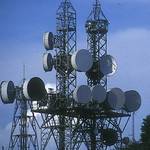 on Barbados Island which has enjoyed a govemment protected monopoly for many years. The client TIC provides mobile services as well as fixed-line services for both intemational and domestic lines.
In about a year’s time, the Barbados government will deregulate the telecommunications industry and invite other companies to enter the Barbados market. Our client TIC has engaged McKinsey & Company to discuss ways to deal with this new environment.
If the candidate asks: “Why does the Barbados government want to deregulate the telecommunications industry?”
Interviewer input: “Two main reasons: (1) Government collects more revenues in the form of spectrum licensing fees; (2) More competition will reduce prices which is better for consumers”.
Possible Solution:
Question 1: Our client TIC would like help in drawing up some possible scenarios. What information would you need in order to flesh out realistic scenarios?
Possible Answer:
The candidate may outline the following high-level issues:
* Market Size / Structure: Given the market size and the number of customers, is the market more likely to remain a natural monopoly or evolve into a duopoly/oligopoly/monopolistic competition?
* Characteristics of Potential Competitors: What are their capabilities and which segments (mobile, domestic/international fixed) are they likely to target?
* Entry Barriers: What entry barriers can TIC use or muster?
Natural barriers include high set-up costs, high fixed costs, etc.
Artificial barriers: TIC could lobby government to set higher spectrum-licensing fees etc.
Question 2: Could you tell me more about the financial information on the client TIC that you’d like?
Possible Answer:
The candidate should cover the basics of revenue and cost information. Suggested answers include:
Revenue: How is pricing done for the different service segments? What are the usage volumes? What are the trends across time?
Costs: What are the set-up costs, recurring fixed costs, and variable costs?
Question 3: I will give you some data on the international fixed-line services.
Latest revenue (year 2015) = $90M
Total costs = $30M (all annual fixed costs)
Assume that with new entrants and competition, prices will drop 50% but usage volumes do not change. What market share does TIC need to maintain in order to break even?
Possible Answer:
Candidate’s answer should walk through the following logic:
New Market Size = 50% * $90M = $45M
TIC’s break-even revenue = $30M
TIC’s required Market Share = $30M/$45M = 2/3 = 66.7%
Implication: the client TIC can afford to lose only 1/3 market share to competition.
Question 4: Let’s use more realistic assumptions this time. Assume that volume of usage does increase when prices fall 50% due to competition. Please take a look at the following data and tell me what you see. Then tell me what market share is needed in order for the client TIC to break even.
International Fixed Lines
| Usage | Revenues ($) | Total User Minutes |
| 2015 (latest) | $90M | 90 million |
| 2014 | $120M | 60 million |
| 2013 | $120M | 60 million |
| 2012 | $160M | 40 million |
Possible Answer:
Candidate should use the information to (1) calculate prices charged in the past and (2) derive price-volume (demand) relationship.
| Usage | Revenues ($) | Total User Minutes | Price ($/user min) |
| 2015 (latest) | $90M | 90 million | 1 |
| 2014 | $120M | 60 million | 2 |
| 2013 | $120M | 60 million | 2 |
| 2012 | $160M | 40 million | 4 |
Based on the data, the candidate may draw a demand curve (Total User Minutes vs. Price curve).
If the candidate tries (too hard) to extrapolate the demand curve to predict volume based on a price of $0.50, guide him/her to the simpler heuristic that each time price dropped 50%, volume increased 50%.
Therefore:
New Price = $0.50/user min
New Volume = 90 million * (1 + 50%) = 135 million user minutes
New Market Revenue = $0.50 * 135M = $67.5M
Break-even TIC revenue = $30M
Required Market Share = $30M/$67.5M = 44.4%
Implication: With more competition, user volumes will also rise and TIC’s required market share to break-even is not as high as initially assumed (44.4% vs. 66.7%).