Luxury Bus Company LimoLiner to Launch Low-cost Bus Line
Case Type: new business; business competition, competitive response.
Consulting Firm: Deloitte Consulting first round full time job interview.
Industry Coverage: transportation.
Case Interview Question #00760: Your client LimoLiner is a Northeast-based luxury bus company that operates inter-city passenger buses along the Boston — DC corridor. The client has been in this market for over 40 years and has been reasonably profitable for most of that time. LimoLiner buses have larger 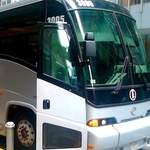 leather seats with more legroom than typical intercity buses. In addition to a bathroom, the bus has an attendant and a small galley provisioned with free light snacks.
In recent years, the client LimoLiner’s market share and profitability have been declining. Looking at the competitive landscape, the CEO of LimoLiner recognizes that a number of low-cost, no-frills bus companies have entered the market. As a result of these new entrants and high gas prices, overall demand for inter-city bus services has been on the rise even as our client loses customers.
The client has hired us to determine whether they should launch their own low-cost bus line. And if so, how they should compete in this market?
Additional Information: (to be provided upon request)
- The client LimoLiner targets a 40% gross margin for any new investments.
- The overall inter-city bus services market is growing at about 5% per year.
- The client LimoLiner’s two main routes are Boston — New York and New York — DC. There are 5-6 competitors on each route.
- The low-cost bus lines (Lucky Star Bus, Fung Wah Bus, Yo! Bus, Bolt Bus, etc) typically operate out of Chinatown in the respective cities or pick up on the street (not in stations). They tend to use older equipment and have poor reputations for reliability and safety.
- The client LimoLiner is struggling most with “first-time riders”, who tend to be younger, perhaps in college, and are riding inter-city buses for the first time. The client has a stable base of long-term customers where they have not seen much erosion.
Possible Answer:
1. Suggested Framework
A good structure for this case would focus on profitability, but might also touch on issues of assessing the market, differentiation of the competitors, the client’s capabilities, and customer segmentation. Ideally, the case taker should ask if there are any metrics that the client focuses on before structuring the case, which would demonstrate that profitability is going to be the focus. You can allow the interviewee to pursue some other areas of investigation initially but try to guide them towards the profitability question eventually.
While there could be a number of ways to look at profitability (and the interviewer should let the interviewee or case taker think through how to approach this), the case takes a simplified approach of looking at one bus operating on one route and assumes that this would be scalable across additional buses. The fictional data presented below is for the Boston-New York route. Feel free to make the math a little harder (e.g. bus makes 900 trips per year) if the interviewee needs to practice.
Once the interviewee has completed the profitability analysis, have them brainstorm responses for the second question of the case: How could the client effectively compete in this market?
2. Analysis
A. Breakdown of Revenue (data provided on request)
- The client currently charges $40/one way on the Boston-New York City route
- Low cost competitors are currently charging an average price of $15/one way
- Each bus has capacity of 60 seats and estimated average utilization of 67%
Total revenue per one-way trip (new low-cost bus line) = $15 * 60 * 67% = $600
B. Breakdown of Costs (Note: since our focus is on gross margin the interviewee can ignore SG&A costs)
Fixed Costs: (bus operates 330 days/year at 3 trips per day, thus ~1000 trips per year)
- Bus: $250k (useful life of 10 years) = $25/trip
- O&M: $20k/year = $20/trip
- Insurance: $15k/year = $15/trip
Variable Costs:
- Labor: 1 driver at a wage of $25/hour for 5 hours = $125/trip
- Fuel: $4/gallon, 200 miles, 10 miles per gallon = $80/trip
- Tolls: $75/trip
C. Profits
- Total Costs = $25 + $20 + $15 + $125 + $80 + $75 = $340/trip
- Total Revenue = $600/trip
- Profits = $600 – $340 = $260
- Profit Margin = $260/$600 = 43.3%
Question #2: How should the client compete in this market?
Possible Answer:
Good responses to this question should recognize that customers that take the proposed new low-cost bus lines are very price conscious and thus the client will have to compete on price (i.e. match competitors’ low prices). However, the client should look for how they can differentiate their product from the new competitors. Potential responses include:
- Focus on safety and reliability
- Offer additional amenities (e.g., Wi-Fi, music, movies, etc.)
- Offer food and drink service (bonus points if they mention this as an additional revenue opportunity)
- More direct routes
- More convenient pick-up locations
- Loyalty programs
- Leverage existing brand (Warning: This would likely hasten cannibalization and is not a good idea)
3. Conclusion
A. Recommendation
The client LimoLiner should launch their own low-cost bus line
- Meets gross profit target of 40%
- Room for new competitor in growing market
- Will continue to lose customers if they do not act
Risks:
- Cannibalization of existing customers (This is a big one!)
- Competitor Response: engaging in a price war with competitors that have lower costs
- Rising fuel costs
B. Next Steps
Potential next steps include:
- Identify opportunities to generate additional revenue sources in order to make up for lower profitability of new bus line
- Conduct market study of “first time riders” to determine what additional amenities they would value the most
- Develop retention strategy on existing bus service to minimize cannibalization
- Develop distinctive branding strategy for new bus line
- Launch pilot on one route to validate financial assumptions and test competitor response