How to Turn Around a Whataburger Fast Food Restaurant?
Case Type: business turnaround; competition.
Consulting Firm: Alvarez & Marsal first round summer internship job interview.
Industry Coverage: restaurant & food service.
Case Interview Question #00666: Whataburger is a privately held, American regional fast food restaurant chain that specializes in hamburgers. Headquartered in San Antonio, Texas, United States, the chain is owned and operated by the Dobson family, along with 25 franchisers. As of September 2012, 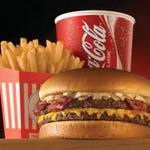 there are over 735 Whataburger stores across the Southern United States region.
One of your classmates from college just bought a Whataburger restaurant in Dallas, Texas a year ago. He just called you to complain that the Whataburger fast food burger joint he bought last year has been steadily losing money for the last 6 months. He wants to know what you think he should do about it. Where do you start? How would you help your classmate to turn around his burger restaurant?
Suggested Approach:
This is an example of a profitability case where virtually no information is provided and the candidate needs to take a minute to figure out where to start probing. In this type of case, the candidate is evaluated based on the number of factors questioned up front plus the ability to logically pare down that list to get at the heart of the matter.
Since Profits = Revenues – Costs = Price * Volume – Costs, here are some of the initial questions the candidate could ask to probe for more information:
- Have revenues decreased?
- Have costs increased?
- Have prices increased?
- Was the store making money 6 months ago? What has changed?
- Is there new competition?
- Has there been a major economic change in the area?
- Was there a major event like someone getting sick? Health code violation? Crime?
The answers to these questions will help to frame the extent of the required analysis.
Possible Answer:
Candidate: First of all, what do you mean by “losing money”? Have profits declined or is the business in the red?
Interviewer: Profits have declined.
Candidate: Have revenues decreased? Or, have costs increased? Or both?
Interviewer: Revenues have decreased.
Candidate: Well, if revenues have decreased, there are either fewer paying customers or the customers are spending less when they visit. Which is the case?
Interviewer: While they could both play a role, in this case, there are actually fewer customers.
Candidate: Fewer customers could be due to external factors like new competition, change in eating habits, local changes like a major business closing in the area. There are also internal factors to consider such as poor food quality, higher prices, or a major event like someone getting sick or a health code violation. Recognizing that there are likely many factors involved, is the issue primarily internal or external?
Interviewer: The issue is external and is driven by a new competitor that opened just across the street.
Candidate: This new competitor must be offering a better value to have made such an impact on our client’s burger joint.
- What is their value proposition?
- Are they offering a different type of food?
- Is it better quality?
- Is there a price disparity?
Interviewer: The new competitor serves chicken dinners and appear to offer a completely different experience. How would you get a deeper understanding of their value proposition?
Candidate: First, I would visit and learn everything that I can from what I see and experience first hand.
- How is the quality of the food?
- Are the prices reasonable?
- Do they offer healthier options and more variety?
- How is the service? How is the cleanliness?
- How is the facility laid out?
- Do they have more parking? Easier access?
Once I get a first hand view of the competition, I would take a hard look at the Whataburger burger joint and the value proposition they are offering. The same questions would apply.
Next, I would do some primary research including customer interviews at both locations. The focus of these interviews is to discern the differences in perception between the two locations. I would pay some customers to go to each restaurant and rate the food and experience. I would also determine how many of the customers are former Whataburger burger joint customers but now exclusively chicken customers, versus how many visit both and how many are completely new to the chicken place but would not visit the Whataburger restaurant.
Armed with the data on what customers’ value, I would then create a set of options to evaluate. There are likely a number of areas that need improvement including new menu options, improved facility layout, better taste/quality.
- Which will drive most traffic back into the restaurant fastest?
- Which give the largest return on investment?
After analyzing the alternatives based on the chosen criteria, I would prioritize them and develop an action plan to include timing and responsibilities.
Interviewer: Very good. Sounds like you know the fast food restaurant business pretty well. What else would you do?
Candidate: (At this point the case could go in several directions from leadership and project management issues, to brand marketing and promotion, to financial decisions whether to close the facility).
Summary Comments
This type of case can be very intimidating since it is very broad and ill-defined up front. The interviewer may not provide much guidance or detail, increasing the stress level. When faced with a case interview of this type, the candidate should try to remain calm and methodical. Writing down the alternatives and crossing them out as they are ruled out is a good way to show their thought process. Thinking aloud is encouraged. The candidate should take a little time in the beginning to frame the issue so as not to develop a hasty hypothesis and head down the wrong path.