ExxonMobil to Attach More Grocery Stores to Gas Stations
Case Type: business competition, competitive response.
Consulting Firm: Schlumberger Business Consulting (SBC) first round summer internship job interview.
Industry Coverage: oil, gas & petroleum industry.
Case Interview Question #00663: Your client Exxon Mobil Corporation (NYSE: XOM) or ExxonMobil, is an American multinational oil and gas company headquartered in Irving, Texas, United States. Formed in November 1999 through the merger of Exxon and Mobil, ExxonMobil is now the largest of the six oil supermajors 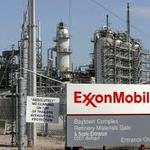 in the world (BP, Chevron, ExxonMobil, Royal Dutch Shell, Total S.A., ConocoPhillips).
Currently ExxonMobil is the biggest downstream gas operator in the United States, i.e., it operates the largest number of retail gas stations. The downstream oil sector is a term commonly used to refer to the selling and distribution of natural gas and petrol products derived from crude oil, such as gasoline, jet fuel, diesel oil, etc.
In the last three years, the oil & gas retail industry has been liberalized and several new competitors have entered the market. In particular, one competitor Gulf Oil Company has been extremely aggressive in the market. In fact, they have from the very start charged a lower price for gas than our client even though the client ExxonMobil is the biggest player in the market. This has caused our client’s market share to erode. How is the competitor able to do this? What should our client do to mitigate competitive actions?
Possible Answer:
Candidate: Interesting case. My first instinct is to understand why the competitor Gulf Oil has been able to charge a lower price than us. I will need to know the prices my client ExxonMobil and the competitor Gulf Oil are charging. I also would want to understand the client’s cost structure and our competitor’s cost structure. To begin, what are the prices charged by the two companies?
Interviewer: Assume that our client’s gas price per gallon is $3.75 while the competitor’s is $3.15.
Candidate: OK, then to understand the cost structure, it will be useful to use the value chain framework. The value chain is comprised of largely two segments: the first is the delivery of oil through pipes and oil trucks; the second is operation of the petrol stations. I would assume that there is no difference between our client’s and the competitor’s cost in oil delivery. Do we have a figure for this cost?
Interviewer: Yes, the client ExxonMobil has told you the delivery cost is approximately $1.50 per gallon.
Candidate: For the petrol station operations, are there any big differences? What are the hours of operation of our client’s gas stations versus the competitor’s?
Interviewer: The main difference is that our competitor Gulf Oil’s gas stations do not operate between the hours of 1am and 5am, while our client operates 24 hours a day.
Candidate: Then that would mean a greater cost to our client than the competitors in operations. Do we have a figure for the cost to our client for operations?
Interviewer: Yes, it’s about $2.10 per gallon for our client, and about $0.30-$0.35 cheaper for the competitor’s.
Candidate: OK, then rounding to $2.10 – $0.30 = $1.80 per gallon for the competitor’s operating cost and $1.50 per gallon for their delivery cost, the total cost per gallon for the competitor is around $1.80 + $1.50 = $3.30, which is higher than the price that they charge of $3.15. Our client’s total cost per gallon is $2.10 + $1.50 = $3.60, which is lower than the gas price of $3.75.
The next step is to understand why the competitor is undercharging. Is the competitor losing money deliberately in order to gain market share?
Interviewer: No, it has been doing this for the last three years and has been making money actually.
Candidate: That would lead me to believe the competitor is making money from other offerings than gas sales. Perhaps it has a snack or grocery shop or some other items to sell. Is that the case?
Interviewer: Yes. Other profits come from the sale of groceries & snacks from the gas station’s mini-mart or convenience stores. For every gallon of gas that it sells, it makes $0.50 in other profits.
Candidate: What about our client? Do they have other sources of revenue?
Interviewer: Our client’s gas stations has only a few vending machines from which it earns about $0.06 in profit for every gallon of gas sold.
Candidate: This means that the competitor’s strategy is to reduce the price of oil to attract customers who will purchase more profitable snack & grocery items. My initial recommendation would be for our client ExxonMobil to also embark on such a strategy: attach convenience stores and mini grocery stores to their gas stations and include grocery, food, drinks, and snack items in their convenience stores.
Interviewer: Excellent! Let’s stop here. Thank you for your analysis.