PepsiCo to Grow Market Share in Food Service Industry
Case Type: increase market share; business competition.
Consulting Firm: Capgemini Consulting final round job interview.
Industry Coverage: food and beverage; restaurant & food service.
Case Interview Question #00600: The client PepsiCo Inc. (NYSE: PEP) is a large multinational food and beverage consumer packaged goods company (CPG) headquartered in Purchase, New York, United States. Formed in 1965 with the merger of the Pepsi-Cola Company and Frito-Lay Inc., PepsiCo has since expanded from its namesake 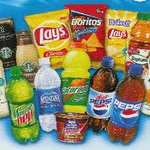 product Pepsi carbonated soft drink to a broader range of foods, snacks and beverage brands, with interests in the manufacturing, marketing and distribution of grain-based snack foods, non-carbonated beverages, and other consumer packaged products.
PepsiCo has a 40% market share in traditional CPG channels, like large format grocery. However, they only have a 17% market share in the food service channels. You have been hired to help them grow their market share in the food service business. How would you structure this case?
Additional Information: (to be given to you if asked)
There’s a lot of additional information in this case. The candidate should probe for this information because it’s essential for solving the case.
1. The client PepsiCo has one major competitor in beverage, the Coca-Cola Company, but no major competitor in their foods portfolio.
- The beverage portfolio consists of sodas, bottled waters, juices, teas, health drinks, and new specialty bottled drinks – no alcoholic beverages.
- Their food portfolio consists primarily of snack foods (for example, Frito-Lay and Quaker Oats brands) for throughout the day, i.e., breakfast, lunch, and later.
- The client’s main competitor the Coca-Cola Company is a major beverage company, and the Coca-Cola Company does not have any significant sort of food portfolio.
2. The client PepsiCo’s market share is 17% across the food service market. But within this market, the market share for the client varies in the different segments and sub-segments. There are three primary segments in the food service market:
- cafeteria and workplace food service,
- restaurants (which is comprised of fast food, slow fast food / alternative fast food, and other),
- entertainment / theme park venues, and
- misc.
Amongst these segments, restaurants is definitely the largest, with 70% share of the market.
3. Within restaurants segment, there are a few sub-segments:
- fast food (Wendy’s, Burger King, McDonald’s),
- slow fast food / alternative fast food (Chipotle, Au Bon Pain, California Pizza Kitchen Express, Wolfgang Puck’s, Boston Market, Cosi, etc), and
- Misc. (corner deli, mom and pop, etc.)
The fast food segment is dominated by our major competitor the Coca-Cola Company, who has a 70% market share in this segment. Slow fast food / alternative fast food is a smaller segment, but it is growing at 30% a year, as a part of a trend of eating healthier.
Possible Solution:
This “growing market share” case is really a 3C’s case. If you use the 3C’s framework, develop questions around them that are relevant to the specific question, and probe the interviewer for new and relevant information, then you can crack the case. This is not a numbers case. Some knowledge of marketing and consumer packaged goods would be helpful. Later in the case, using the 4P’s framework to help think through the questions about how specifically to grow market share would be helpful in generating ideas.
Candidate: I’d like to make sure that I understand the case. So, our client PepsiCo is a traditional CPG company, with a large beverage and foods portfolio. Can you tell me a bit more about that portfolio? I’m assuming that PepsiCo has sodas and juices? Do they have other types of drinks?
Interviewer: Sure. PepsiCo’s beverage portfolio consists of carbonated soft drinks (sodas), bottled waters, juices, teas, health drinks, and new specialty bottled drinks, but no alcoholic beverages.
Candidate: What about their food portfolio? What is that comprised of?
Interviewer: The food portfolio consists primarily of snack foods for throughout the day (ie, breakfast, lunch, and later), for example, Frito-Lay potato chips, Quaker Oats cereals. That’s one thing that makes us distinctive from our main competitor the Coca-Cola Company- we have both a food and beverage portfolio. Competitor Coca-Cola Company only has beverages.
Candidate: Interesting. So, they have a pretty comprehensive portfolio. Can I have a minute to structure my thoughts?
Interviewer: Sure. Take your time.
(Now the candidate should take a few minutes to structure the case. This will require more than just laying out a framework but also identifying key questions that will help them drive to an answer.)
Candidate: I would like to know about three main things: (1) customers, (2) our company and capabilities, and (3) the competition and how we can differentiate between them. In those three main categories of information, there are a few key questions that I’d like to answer. This is how I might structure it:
- Customers
- Who are the potential customers in the food service market?
- Cafeteria / Workplace food service
- Restaurants: fast food, slow fast food, other?
- Entertainment venues: movie theaters, theme parks
- Other?
- Company
- What’s in our portfolio?
- Food portfolio
- Beverage portfolio
- Do we have any capabilities that are specific to us?
- Competitors
- Who are our major competitors?
- What do we have that differentiates us from our competition?
- Where are our competitors strong? Where are we stronger than them? (Market shares?)
Interviewer: That’s good. What would you like to start with first?
Candidate: Well, we already talked about our company and portfolio a bit; is there anything else that I should know about our company. Like, do we have any capabilities that our competition doesn’t have?
Interviewer: Not really.
Candidate: Well, I’d like to know a little more about customers in the market. I don’t know much about the food service market, but I imagine that there’s a lot of that falls into the group of customers.
Interviewer: You’re right. You’ve listed a few. Why don’t we discuss those.
Candidate: Sure. I imagine that food service industry includes things like cafeterias, both at schools and universities. And, I know that the company I worked at before business school had a cafeteria, maybe that as well?
Interviewer: Yep. What else do you have?
Candidate: Well, then, there’s movie theaters and theme parks, maybe places like bowling alleys?
Interviewer: Sure. What else?
Candidate: Yes, there’s also restaurants. And then, there might be customers that I’m forgetting. Is there anything else?
Interviewer: Sure, there’s probably some sort of miscellaneous group, but you’ve covered the main ones. So, of those main three, what do you think the sizes of the segments are?
(The Interviewer is testing the candidate’s business judgment and common sense in asking for the candidate’s sense of the sizes of the segments.)
Candidate: I think that miscellaneous is pretty small. And then, the entertainment one is also pretty small and stable. But the cafeteria and workplace one, I imagine that that’s a little bigger, and maybe it’s growing. And then, the restaurant one, I bet that’s the largest. Though, I’m not sure how fast it’s growing.
Interviewer: You’re basically right. The restaurant segment is definitely the largest, it’s about 70% of the food service market.
Candidate: If I think back to the original question of helping the client PepsiCo grow their market share in the food service segment, I think that I would focus on the restaurant segment. Can you tell me a bit more about that segment of the food service market?
Interviewer: Well, what do you think about that segment?
(Part of what the Interviewer is testing here is the candidate’s ability to use common sense to lead the case and see what they can deduce on their own.)
Candidate: Well, I imagine that restaurants includes a few sub-segments. For a CPG company, high-end restaurants are out. But in the low-end, there’s probably fast food, delis and mom and pop shops, and miscellaneous.
Interviewer: That’s right. There’s one big, new one that you’re missing. It’s referred to as “slow fast food”. It’s new chains with more made-to-order, healthier food. It’s restaurants like Chipotle, Au Bon Pain, California Pizza Kitchen Express, Wolfgang Puck’s, Boston Market, Cosi, etc. It’s part of people’s need to eat healthier.
Candidate: Interesting. I imagine that this new segment is growing a lot faster than the other segments. But it’s small. If I think about the original question of the case, if I was going to try to grow market share, I might try to grow it throughout the restaurant segments. However, before I make a recommendation, I’d like to know a bit more about the competition, we haven’t talked much about that.
Interviewer: You’re right. Well, the competition is pretty fierce in the fast food subsegment. The client has one main competitor the Coca-Cola Company. They only make beverages, and they have a 70% market share in fast food.
Candidate: Wow. Well, given that, I would focus on the other two segments: this new “slow fast food” segment and the mom and pop segment.
Interviewer: Great. What would you do to try to focus on them and grow your market share with them?
(The candidate might want to take a few seconds to think about the answer to this question. It’s kind of the crux of the solution to the case. Since it’s a marketing question: how to grow market share, the 4 P’s come in as a handy framework to use to think through the case.)
- Placement
- Are there customers in the restaurant segment that we’re not taking care of right now? New sub-segments?
- Product
- Can we offer specialty products / tailor-made products to restaurants?
- Can we offer new product packaging that is specific to our restaurant customers?
- Price
- Should we compete on price? Do we want to compete on price? (Price competition could grow our unit share, but hurt our dollar volume share and our profits overall)
- Promotion
- Can we cross-promote with our restaurant customers?
- Will cross-promotion help grow restaurant customers’ loyalty to us?
Candidate: Well, there are a few things that we could do to grow our share with these customers. In terms of price, well, we could change our price, but I don’t think that we want to compete on price. That could help us grow our unit volume share, but it might hurt our dollar volume share and definitely would hurt our profits. In terms of placement / distribution, is there any way that we can grow our share by distributing to new customers or new locations?
Interviewer: Maybe. But we already distribute to a majority of the market. What else could you do to grow market share?
Candidate: In terms of promotion, maybe the client can create partnerships with certain customers or customer chains and run cross promotion campaigns, like advertising campaigns, or coupons. And in terms of product, maybe they can create customized products for their restaurant customers, like new packaging, or specialty sizes, etc?
Interviewer: Yep. That’s great. That’s a good way to grow share. But can you just quickly give me some of the pros and cons of specialty or custom products?
(Here, the Interviewer is testing the candidate’s ability to identify some business risks with new ideas – testing business judgment and risk identification.)
Candidate: Well, on the pros side, it would build a special relationship with the customer; it might differentiate us from our competition Coca-Cola. On the cons side, our profit margins would definitely decrease on custom products. So, we might grow our share, but not our overall bottom line.
Interviewer: That’s right. So, is there anything else, other than custom products or any of the ideas that you mentioned – that can help us grow our share in the restaurant segment?
(Here, the Interviewer is looking for a specific answer. If the candidate doesn’t get it, don’t worry about it. You can still get the job without getting the answer to this one.)
Candidate: Well, when I think about the information that I got early in the case, the only thing that I have that really differentiates us from our competition is the fact that we have both food and beverage portfolio. Maybe we can leverage the fact that we can distribute food products and beverage products to restaurant customers to grow our market share?
Interviewer: Yes, that’s right. So, how would you summarize your recommendation?
Candidate: The client wants to grow their market share in the food service segment. The best way to do that would be to focus on the restaurant segment of the food service market, because that’s the largest part of the market – nearly 70%. Within that, the client should focus on the non-fast food segments, as those segments aren’t dominated by our major competitor and are still up for grabs. And they’re growing faster than the traditional fast food segment. The best ways to grow market share within those sub-segments, without hurting the bottom line, would be to leverage the breadth of our portfolio, having both food and beverage products to offer which our competition does not, and perhaps by making custom products, where it doesn’t hurt our profit margins.
Interviewer: Very good! You did a great job.