Alstom to Add Overnight Delivery Service for Circuit Breakers
Case Type: increase market share; business competition/competitive response.
Consulting Firm: Capgemini Consulting first round job interview.
Industry Coverage: industrial equipment; electronics & semiconductors.
Case Interview Question #00399: Alstom (Euronext: ALO) is a large multinational conglomerate which holds interests in the power generation and transport markets. The company’s headquarters are located in Levallois-Perret, near Paris, France. For this case, we’re only concerned with a particular small division of Alstom’s USA operations 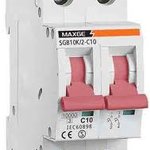 that manufactures electrical equipments.
Recently, the client has been losing market share in the U.S. for the past two years. The Director of the division has hired your consulting team to help him find out the cause of declining market share. Also, he would like you to come up with a quick solution to fix the problem. How would you approach thhis case? What would you tell the client to do?
Additional Information: (to be given to you if asked)
1. Company/Product
This particular division of Alstom USA has only one product line: low-voltage Miniature Circuit Breaker (MCB) for industrial use. The low-voltage miniature circuit breakers currently on the U.S. market are undifferentiated from a quality standpoint, and are also completely interchangeable.
A circuit breaker is an automatically operated electrical switch designed to protect an electrical circuit from damage caused by overload or short circuit. Its basic function is to detect a fault condition and, by interrupting continuity, to immediately discontinue electrical flow.
2. Competition
There are three major players in the U.S. market of miniature circuit breakers: our client, General Electric (GE), and Siemens. Their market share and price per unit are shown in the following table.
| Competitor A: GE | Competitor B: Siemens | Client | |
| Market share two years ago | 25% | 35% | 40% |
| Market share today | 38% | 35% | 27% |
| Price per breaker | $9.00 | $8.10 | $9.50 |
There have been no price changes over the past two years. Market share was fairly constant prior to that period. The market is mature. Competitor GE has stolen market share from the client.
(Do not give this point away too easily!) About two years ago, Competitor GE began delivering circuit breakers via overnight air freight instead of regular U.S. mail. Competitor Siemens has always used second-day air. The client relies on regular U.S. mail shipments.
3. Customers
The miniature circuit breakers are generally purchased in large quantities by large manufacturing plants. Since the circuit breakers are used on large, very expensive machines, the price per unit is much less important than reliability. There is a large downside risk if a circuit breaker proves faulty, and substantial financial implications if a customer runs out of circuit breakers (machines cannot be operated).
The customer base is very fragmented, representing most manufacturing companies.
Possible Answer:
The key point in this market share case is to uncover the fact that Competitor GE has stolen some of the client’s market share by increasing the level of delivery service. The criticality of the product to a customer’s business makes price a secondary purchase criterion. GE has been targeting the client’s customers and convincing them to switch to superior service (overnight delivery).
To remedy this problem, the client should consider adding overnight delivery service too. However, this may not be sufficient since the client charges a higher price than GE ($9.50 vs. $9.00) and the enhanced service will only match that of GE, customers will still have little incentive to switch back to the client.