Diamond Foods Improves Profit Margin for Its Snack Foods
Case Type: improve profitability; business competition, competitive benchmarking
Consulting Firm: Ernst & Young (EY) Advisory first round job interview.
Industry Coverage: food & beverages.
Case Interview Question #00381: Your client Diamond Foods (NASDAQ: DMND) is a consumer packaged goods company headquartered in Stockton, California. In 2008, Diamond Foods purchased popcorn brand Pop Secret from General Mills (NYSE: GIS). In 2010, Diamond Foods purchased the potato chip company Kettle Foods. 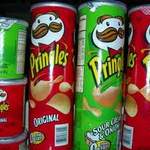 Most recently, in April 2011, Diamond Foods agreed to acquire snack foods brand Pringles from consumer goods giant Procter & Gamble (P&G, NYSE: PG), which on completion will more than triple the size of its snack business.
Diamond Foods has retained your consulting team because its snack foods division seems to be not performing as well as the competition. Frito Lay, a division of PepsiCo (NYSE: PEP) is the dominant player with 42% of the market, revenues of $5 billion, and operating profits of $1 billion or 20%. Client Diamond Foods has 8% of the snack foods market, revenues of $850 million, and operating profits of -$25 million or -3%.
The data above shows a 23% difference between client’s and major competitor’s operating profit margins. What is the cause of this 23% gap? What recommendation would you give to the client in order to close the gap?
Additional Information: (to be provided to candidate if asked)
Products: Client’s snack division produces a variety of snack foods — primarily chips (potato chips, corn chips, tortilla chips, etc), but also items like cookies and cakes.
Price: Frito Lay and client charge roughly the same prices for 80% of the product range. However, for tortilla chips, Frito Lay charges $2.99/bag, while the client only charges $1.99. Tortilla chips account for 20% of client’s revenues.
Costs: Client’s costs break down as follows:
- COGS (cost of goods sold) 45%
- Shipping 5%
- Local Market Distribution 31%
- Marketing & Promotion 7%
- Other overhead 12%
Distribution: Client’s local delivery trucks deliver $3500 worth of goods each week, while Frito Lay’s deliver $6000.
Possible Answer:
1. Price:
Tortilla chips are 20% of client’s revenues, or $850 * 20% = $170 million. Frito Lay is receiving $1 more per bag of chips. $1 is 50% of client’s price for their tortilla chips ($1.99). 50% of $170 million = $85 million. $85 million is 10% of $850 million. Therefore, price difference accounts for 10% of the 23% profit margin gap.
2. Cost:
The candidate must recognize that Local Market Distribution accounting for 31% of client’s total costs seems too high. Frito Lay is receiving $2500 more worth of goods than client each week, which is $2500/$6000 = 42% of the $6000 total. 42% multiplied by 31% = 13%. Thus, higher Local Market Distribution costs accounts for the remaining 13% of the 23% profit margin gap.
Once the candidate has successfully identified the two causes of the 23% gap between client’s and major competitor Frito Lay’s operating profit margins, solutions can be proposed to close the gap accordingly.