HP to Grab U.S. Printer Market Share from Competitors
Case Type: increase sales/market share; business competition.
Consulting Firm: OC&C Strategy Consultants 2nd round job interview.
Industry Coverage: Computers & Office Equipment.
Case Interview Question #00374: Our client Hewlett Packard Company (HP, NYSE: HPQ) is a large information technology (IT) corporation headquartered in Palo Alto, California, USA. HP provides products, technologies, software, solutions and services to individual consumers, small and medium sized business 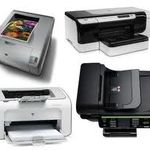 (SMBs) as well as large enterprises.
HP is a world leader in computer printers — they manufacture different kind of printers: inkjet printers, laser printers, impact (dot-matrix) printers, solid ink printers, LED/LCD printers, all-in-one multifunction printers, etc. Traditionally HP has had a dominant market share in all categories of printers. However, the Head of HP’s printer division is worried that they might be losing share to competitions. Is this true? If so, how would you come up with a solution to rectify the situation?
Additional Information: (to be provided to candidate if asked)
- There are five categories of printers in the market: Category 1 being the slowest and Category 5 being the fastest.
- Faster printers are used by corporates and commercial users and slower one by home consumers.
- There are three major players in the U.S. printer market. Market share data for client HP and its two competitors (Lexmark, Dell) are as follows:
Printer type Lexmark Sales Dell Sales HP Sales Industry average growth HP’s growth Category 1 4MM 5MM 20% -5% Category 2 1MM 2MM 10% 10% Category 3 2MM 4MM 5% 5% Category 4 5MM 4MM 5% 5% Category 5 20MM 50MM 4% 3% - Category 1 printer’s customers are mostly home consumers and they care only about price.
- Category 5 (candidate should deduce from the above table) market is mature and does not offer too much room for growth.
- Competitor Lexmark’s printer is far inferior to client HP’s printer.
- Price for Catetory 1 printers: HP: $89.00, Lexmark: $49.00.
- Client HP has 2% margin for Catetory 1 printers. Cost of Catetory 1 printers to Lexmark is $69.00.
- All printer manufacturers also supply cartridges — consumers buy $200.00 worth of cartridges over the life of the printer.
- Consumers have to buy cartridges from the same manufacturer.
- Competitor Lexmark has a margin of $100.00 on the cartridges, while HP’s margin is $20.00 on the cartridges.
- Client HP does not actually manufacture its Catetory 1 printers, it has entered a long-term, non-negotiable agreement with a Japanese printer company Canon for their category 1 printers.
- Difference between category 1 and 2 printers is only in speed — category 2 is faster, manufacturing cost is the same for the two types of printers.
- Agreement with Japanese player Canon is only for category 1 printers.
Possible Answers:
To structure his/her analysis for this case, the candidate must first understand a bit about the company, the products (mix) and see if there has been any price/quantity drops.
Next, understand the customer segment the client serves, the benefits they seek and see if the competition is gaining market share because of a better product or better price.
The 3C’s framework works best for this case, but one could also just look at it as a simple profitability (REVENUE/COST) framework.
1. Client HP is growing at industry average in 3 of the 5 product segments and slower than industry average in 2, so the candidate could conclude that the client must be losing market share.
2. Category 1 clearly has higher potential for client because of high growth rates industry-wide and the fact that it also has only one competitor.
3. Competitor Lexmark is pricing lower than the client does and Category 1 customers are very price sensitive — this is the cause of our client’s poor performance in Category 1 printers.
4. Printer margins:
- Competitor Lexmark = $49 – $69 = Loss of $20.00
- Client HP, with a 2% margin, makes ~$2.00 per printer.
5. However, Lexmark makes a profit of $80.00 on the printer + cartridges ($100 + $49 – $69), while HP makes only $22.00 ($2 + $20). In fact, Lexmark can even give away their printer for free and still make $31.00 in profits ($100 – $69) because of their significant cost advantage with cartridges.
6. The candidate should not be distracted by ‘loss-leader’ strategies or by harping on the quality issue — these are possible answers but clearly it’s a price discrimination (razor-blade) issue here.
Recommendation for Client:
Client HP should start selling category 2 printers with a re-negotiated contract. If our price is in the same range as competitor Lexmark, customers will prefer a better quality / faster printer and we can easily dominate this high-growth market.