Tesco Experiences Sales & Market Share Decline in UK
Case Type: increase sales/market share; business competition.
Consulting Firm: Ernst & Young (EY) 2nd round job interview.
Industry Coverage: food & beverages; retail; general merchandisers.
Case Interview Question #00330: The client Tesco plc (LSE: TSCO) is a global food grocery and general merchandise retailer headquartered in Cheshunt, United Kingdom. It has stores in 14 countries across Asia, Europe and North America and is the grocery market 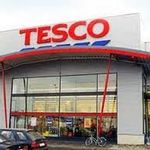 leader in the UK. For this case, we’re going to focus on only Tesco’s UK business.
In the UK, Tesco is a $5B grocery chain with a network of 900 stores, 10,000 square feet each. It used to be the number one player in the UK market. Recently, however, the client is starting to experience a sharp decline in both sales and market share, which shrank from 45% a year ago to 32%. Your consulting team has been retained to find out the cause behind this. Why are client’s sales declining and what can we do about it?
Possible Answer:
To understand the cause of declining sales and market share, 3C’s framework (Company, Customer, Competitors) seems useful here. I started my analysis of the case with the 1st “C”: Company (Products, Costs).
Candidate: What are the product lines, their profitability, and changes over the last year? How do these products compare to the competitors’? What is the cost structure, how has it changed and how it compares to the competitors’?
Interviewer: The client is a low-cost provider, selling simple food products, which are similar to the competitors’. The profitability has not changed much across product lines, but sales across them dropped. The cost structure is the same as competitors’.
Candidate: (It seems cost is not an issue here in this case, so I quickly switched to the 2nd “C”: Customer). Who are the customers? What is the customer mix and how has it changed over the last year?
Interviewer: The customers are largely price-sensitive people; 75% – low income, 25% – moderate income. Over the last year we lost customers in both categories, but mostly in the low income category.
Candidate: (I then switched to the 3rd “C”: Competitors). How many competitors are in the market? What has changed over the last year?
Interviewer: The client has two main competitors: Asda and Sainsbury’s. A year ago, however, a third competitor Morrisons jumped into the market.
Candidate: Since the customers are price sensitive, I assume there is a difference in price of products that this competitor is offering. Is that a fair assumption?
Interviewer: Yes. The third competitor offers private labels, which are cheaper than the brand name products that the client sells.
Candidate: Has the client considered introducing the private labels?
Interviewer: No, that would make a good recommendation.
Candidate: Are there any other differences between the client and the competitor? Do the stores look the same? Are they located in the same areas?
Interviewer: The stores looked differently. The client has warehouse style stores with the top shelves used for inventory. The competitors’ stores look warmer and cozier with all shelves displaying different products. The competitor has fewer stores, but they are located in the same areas as the client’s.
Candidate: Has the client considered redesigning the stores?
Interviewer: No, that would make another good recommendation.
Candidate: Are the client’s stores equally profitable?
Interviewer: No. Some stores are more profitable than others are.
Candidate: What are the reasons for the difference? Are there any common trends among stores with low profitability and high profitability?
Interviewer: At this point the client does not know why there is a difference.
Candidate: I would recommend studying the reasons for the difference and if it’s not possible to turn unprofitable stores around, close them and concentrate the resources on profitable ones. How does the client promote the stores? What are the most effective marketing techniques?
Interviewer: Client uses all kinds of promotions, but does not track how effective they are.
Candidate: In that case I would recommend the client to conduct customer survey and to develop tracking system to concentrate on promotions that are most effective and eliminate the ineffective ones.
Interviewer: Great! I think we have covered all the major points. Why don’t you summarize your recommendations for the client?
Recommendations for Client:
1. Introduce private labels, which are cheaper than the brand name products.
2. Start with redesigning one store as pilot to assess increase in sales. Redesign others if the benefits outweigh costs.
3. Conduct a study evaluating the reasons for low profitability and possibly closing unprofitable stores. Study the costs to streamline business operations and pass savings to the customers.
4. Evaluate promotional activities, concentrate on the most effective, and eliminate ineffective.
Interviewee’s Comments:
To maintain the same kind of profitability for 900 stores is difficult. It’s not a coincidence that the competitor has fewer stores.