Ford Kills Competing Models in Fear of Cannibalization
Case Type: business competition; operations strategy.
Consulting Firm: A.T. Kearney 2nd round job interview.
Industry Coverage: automotive, motor vehicles.
Case Interview Question #00319: The client Ford Motor Company (NYSE: F) is a multinational automaker based in Dearborn, a suburb of Detroit, Michigan, United State. Ford is the second largest automaker in the U.S. and the fifth largest in the world based on annual vehicle sales in 2010. 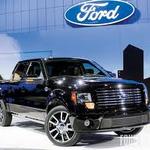 In addition to the Ford and Lincoln brands, Ford Motor Company also owns a stake in Mazda in Japan and Aston Martin in the UK. Ford’s former UK subsidiaries Jaguar and Land Rover were sold to Tata Motors of India in March 2008. In 2010 Ford sold Volvo to Geely Automobile and Ford discontinued the Mercury brand after the 2011 model year.
Ford is a major OEM (Original Equipment Manufacturer) auto manufacturer in the US. The company is extremely vertically integrated. It has a large number of nameplates that it fears are cannibalizing their own products. You have been hired by the CEO of Ford to come up with a strategic plan to address this issue. What do you propose they do?
Possible Answer:
I proposed that we look at three things:
- The competitive landscape in each of client’s product segments.
- The customer segments and how our client’s vehicles are positioned in these segments.
- Our client’s cost position, and whether or not it can be improved through a portfolio rationalization.
1. Competitive landscape
Candidate: How competitive is each of out client’s product segment? Are we competing against ourselves in some segments?
Interviewer: Yes; competition is intense in each segment. Our individual products compete against our own products and those of our competitors. However, the relative competition differs for each segment.
As a follow-on comment, I added that I would want to further analyze the segments, in order to determine what the competition is and how these vehicles are positioned. This could lead to information regarding which segments we would want to target.
2. Customer segments and product positioning
The first piece of analysis that I did for the customer segments and product positioning was to draw a number of 2 X 2 matrices with a number of different attributes (speed, price, fuel efficiency, safety, etc.). Once I did this, I hypothesized that there were more than one product in each of the segments. I highlighted this as a serious problem. I mentioned that this might have happened because through the evolution of the company, and that it may have been a combination of a number of formerly independent brands.
The main problem with this is that the consumer may be having tremendous difficulty in differentiating the brands. I theorized that therefore some automobile models might still be around because they always have been, without much thought about optimizing the portfolio to maximize company profits. Once I analyzed this, I proposed two ways to eliminate models that overlapped within the same segments:
- kill one of the models/brands, leaving behind the more profitable brand;
- keep both models/brands, but invest in advertising and product improvements such that consumers would be able to differentiate the two and thus place the second vehicle into a different segment.
I mentioned that this second option might be difficult, as there is significant inertia in changing people’s minds about a brand that has been a certain type of vehicle for a very long time. I suggested that perhaps the best way to do this would be to keep the most profitable vehicles in each segment that we are in, and eliminate duplicate brands.
3. Costs
The consolidation of models could lead to significant cost savings, as fewer number of models (with greater volume of each) will lead to greater scale efficiencies in purchasing, production, engineering, advertising, etc.
Recommendations for Client:
Get rid of competing models in the same segment in order to better serve customer segments, reduce costs and reduce competition. The use of matrices was a hit!