Oral-B Responds to Competitor’s Battery Powered Spinbrush
Case Type: new product; business competition/competitive response.
Consulting Firm: Booz & Company 1st round internship interview.
Industry Coverage: household goods & consumer products; electronics.
Case Interview Question #00218: Your client is Oral-B, the consumer products division of The Gillette Company (acquired by Procter & Gamble in 2005, NYSE: PG) that produces toothbrushes. Oral-B’s product portfolio consists primarily of a “manual” toothbrush that retails for $3 and an electric “rechargeable” power toothbrush that retails for $50.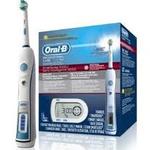
One year ago, a major competitor Church & Dwight Co., Inc. (NYSE: CHD) introduced a battery-powered electric spinbrush under the Arm & Hammer brand that retails for $5 and now controls 1% of the worldwide toothbrush market. The client Oral-B currently lacks a comparable offering and would like to know whether it should develop a similar product or not, and why.
Additional Information: (To be provided if specifically requested)
Hint: (to be provided only if the interviewee struggles significantly with the initial structuring of the problem) The client typically views the market in terms of margins and “per customer per year” metrics.
One year ago, the worldwide market was made up of 80% manual and 20% rechargeable toothbrushes. The spinbrush’s 1% market share gain has come mostly at the expense of rechargeable toothbrush sales.
- Manual toothbrush:
- The client Oral-B’s net profit margin on sales of manual toothbrushes is 66%.
- The average manual toothbrush user goes through 4 toothbrushes per year.
- On average, 2 toothbrushes per year are given to manual toothbrush users free of charge by their dentists.
- Rechargeable toothbrush:
- Rechargeable toothbrushes are sold as two separate components: a “base” that retails for $50 (with a 60% net profit margin) and an associated “head” that retails for $5 (with a 90% net profit margin).
- 1 base and 1 head are needed at all times for the device to work; no other components are compatible.
- The average base last 10 years.
- The average rechargeable toothbrush user goes through 2 heads per year and purchases bases as needed.
- Spinbrush:
- No specific cost data is known for the competitor’s spinbrush offering.
- Client product development believes it could produce a spinbrush “knockoff” at a cost of $3 per brush.
Possible Answer:
1. Analysis:
The most effective approach for this case should begin by calculating figures in terms of profit per customer per year for the three kinds of toothbrush.
- Manual: (2 toothbrushes purchased) x ($3 retail price) x (66% profit margin) = $4 profit per customer per year.
- Rechargeable: (2 heads purchased) x ($5 retail price) x (90% profit margin) + (1/10 base) x ($50 retail price) x (60% profit margin) = $9 + $3 = $12 profit per customer per year.
- Spinbrush: Assuming production costs would be the same for the client and its competitor: (2 toothbrushes purchased) x ($5 retail price — $3 cost of production) = $4 profit per customer per year.
2. Solution:
At this point the analysis becomes more qualitative in nature. While the manual and spinbrush products are similar in terms of profitability, the manual toothbrush addresses the mass market (80% market share at a $3 retail price point) and is unlikely to lose share to the spinbrush. However, the rechargeable segment is most profitable for the client and is clearly threatened by the introduction of the spinbrush. If the client were to respond with a “knockoff” spinbrush, it would likely hasten the demise of its own profitable operations.
3. Conclusion:
Therefore, the client Oral-B should not develop spinbrush product and should consider alternative means to respond to the competitor’s spinbrush “disruptive technology”.