Kodak to Improve Profit Margin for Digital Cameras
Case Type: business turnaround; business competition/competitive response.
Consulting Firm: Booz & Company final round job interview.
Industry Coverage: electronics; consumer products.
Case Interview Question #00205: The client Eastman Kodak Company (NYSE: EK) is a multinational consumer good / consumer electronics company headquartered in Rochester, New York, U.S. Long known for its wide range of photographic film products, Kodak is re-focusing on two major markets: digital photography and digital printing.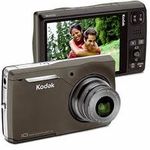
One of Kodak’s products, Digital Camera has never made a profit since its inception although the division has enjoyed double digit growth in the last 4 years. Investors are getting impatient with the negative earnings. Questions to you, a turnaround specialist hired by the CEO of Kodak are the following:
1. What is a good target profit margin for the client (can be zero)?
2. Should the client exit the digital camera business?
3. What recommendation would you make to the CEO regarding the digital camera division?
Additional Information: (to be given to you if asked)
- Kodak sells digital camera through various retail channels: Wal-Mart, Best Buy, RadioShack, Circuit City, on-line stores like Amazon, photo shops, etc.
- Kodak does have different segments of digital cameras, but for the purpose of this case, we will assume that on average Kodak digital camera is priced at $200.
- Quantity sold has been increasing, but client has been losing market share across all segments.
- There are 4 major competitors for the client in digital camera market:
Firm % Market Share Average Price Canon 40% $220.00 Sony 15% $300.00 Samsung 10% $260.00 Nikon 10% $250.00 - 3 factors affect customer buying decision: brand image, good resolution and good lenses.
- Kodak has brand equity because of its presence in related markets (imaging and photographic materials and equipment, camcorder, etc) and also use similar lenses to its competitors.
- Unlike large conglomerate competitors, e.g. Samsung and Sony, Kodak is not involved in any other auxiliary product or services.
- Client’s cost per camera is the same as biggest competitor Canon – $205 per camera.
- Cost structure for Kodak and for biggest competitor Canon are:
Cost Description Competitor Canon Client Kodak Direct material 60% 40% Direct labor 15% 40% SG&A (Selling, General & Administrative Expense) 10% 15% R&D 10% 7% Profit Margin (to be calculated by candidate) 5% -2% - Client’s assembly is done in the U.S, while competitor Canon’s assembly is done in a plant in Shanghai, China.
Possible Answers:
1. Candidate may want to use a REVENUE/COST or similar framework to structure his/her analysis.
2. Do not try to probe the digital camera “average price” issue — this is a simplification, but the other issues are more important in this case.
3. Conclude that client is losing share because of its poor resolution problem and determine by comparing costs that this is most likely due to inferior material.
4. Use the numbers and table to quickly determine that the client is making a loss due to the expensive labor — assembly in U.S. This is also why the client is forced to buy inferior materials.
5. Determine that by outsourcing client can upgrade its direct material quality to be competitive with market leader Canon and make a 3% margin (R&D structure is fixed for client).
Outstanding Answer:
1. Note that closing plant will have union issues and outsourcing will have an initial investment, so a 3% margin may not be worth the effort.
2. A low cost player (with inferior parts and outsourced assembly) may fetch high margins but margins are not likely to last.
3. Probe marketing synergies with other units — Does a presence in digital camera help the camcorder, or digital printing and photographic film division?
4. Do not be afraid to suggest exiting the business if your analysis does not find any ‘nuggets’.
5. If you do recommend staying in the business make sure you outline why staying in a commodity type business will help the client.