Unilever Should Not Lower Price for Its Dove Soap
Case Type: increase sale/market share; business competition/competitive response.
Consulting Firm: Cognizant Business Consulting (CBC) first round job interview.
Industry Coverage: household goods & consumer products.
Case Interview Question #00204: Your consulting team has been hired by Unilever (NYSE: UN for Unilever N.V. and NYSE: UL for Unilever PLC), a multinational corporation that owns many of the world’s consumer product brands in foods, beverages, cleaning agents and personal care products.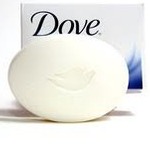
Dove is a personal care brand owned by Unilever. Dove’s product lines include: antiperspirants/deodorants, body washes, beauty bars, lotions/moisturizers, hair care, and facial care products. Recently Unilever has noticed that it is losing market share in the soap product and suspects that its pricing is to blame. The company currently charges $1.20/bar for the Dove soap as opposed to $1.00/bar for the Safeguard soap charged by major competitor Procter & Gamble Co. (P&G, NYSE: PG). Should Unilever lower its price to $1.00?
Additional Information:
Market
- Dove soaps are currently selling 15 million bars/year; were selling 20 million bars/year before the brand started losing market share.
- The soap market is a mature industry (not growing rapidly).
- The marketing department of Unilever believes that lowering its price to $1.00/bar would boost volume back to 20 million bars/year. (How would you test this? Consider a demand analysis using demand instruments.)
Industry
- Unilever has a reputation of producing the highest-quality product on the market and Dove is a highly recognized brand.
- The soap market is dominated by four main competitors. Currently the client’s market share is 12 percent. The four competitors (Procter & Gamble, Johnson & Johnson, Henkel, L’Oreal) have market shares of 30, 20, 17 and 10 percent respectively.
- Currently, the client Unilever has the capacity to handle virtually any increase in demand.
Cost Structure
The company cannot specify the overall cost of a unit (except that it is less than $1.00 and greater than $0.80), but it does know the cost structure to be the following:
- 30 percent labor
- 20 percent inputs
- 20 percent general and administrative
- 20 percent overhead
- 10 percent other
The company is unsure if it has any cost advantage over other competitors, but it clearly enjoys a reputation for the highest-quality soap products.
Possible Approach
In this case, a profitability framework would probably work best here. Focus on incremental revenue and cost numbers since total revenue and total cost numbers are not available.
Competitive Response: Reducing price would probably lead to a price war. Since it is improbable that the client has a cost advantage, it would lose a price war.
1. Incremental Revenue: Using the assumption that demand would go from 15 million units to 20 million units with a $0.20 price decrease, the incremental revenue would be $1 x 20 million – $1.2 x 15 million = $20 million – $18 million = $2 million.
2. Incremental Cost: Since the company has the additional capacity, assume that labor and inputs rise linearly with volume (variable cost = 50%) and that everything else is fixed (the candidate ought to suggest this assumption). Since cost per unit ranges from $1.00 to $0.80, possible incremental cost numbers are:
- $1.00 leads to $0.50/unit incremental cost, giving rise to $2.5 million.
- $0.80 leads to 0.40/unit incremental cost, giving rise to $2.0 million.
3. Incremental Profit: The numbers above give an incremental profit ranging from -0.5 million to 0.
Conclusion: The incremental profit numbers, combined with the probability of a price war, make reducing the price to $1.00 a bad idea. The client should focus instead on quality, brand image, or segmenting the customer base.