Battle of the Brands: Coca-Cola versus Pepsi
Case Type: business competition; industry analysis.
Consulting Firm: Brattle Group 1st round job interview.
Industry Coverage: Food & Beverages.
Case Interview Questions #00035: Coca Cola is a carbonated soft drink produced by The Coca Cola Company (NYSE: KO), an American multinational beverage corporation of manufacturer, retailer and marketer of non-alcoholic beverage headquartered in Atlanta, Georgia. The Coca Cola Company’s marketing tactics led Coca Cola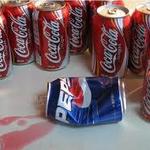 (often referred to simply as Coke) to its dominance of the world soft-drink market throughout the 20th century.
Pepsi is another carbonated soft drink produced by PepsiCo (NYSE: PEP), an American multinational corporation headquartered in Purchase, Harrison, New York, with interests in the manufacturing, marketing and distribution of grain-based snack foods, beverages, and other food products.
Pepsi-Cola and Coca-Cola both compete in the same carbonated soft drink industry. Their cost structures are vastly different, however. Using Coca-Cola as a benchmark, can you estimate the likely cost structure for Pepsi? In other words, for which costs would Pepsi be higher, for which would they be lower, and why?
Possible Solution:
This is a twist on the standard price/cost case that also questions the job candidate’s understanding of the cost items. There is no standard framework that can be directly applied to this case. A possible Value Chain analysis, line item by line item is given here:
- Cost of goods sold: Pepsi would be higher due to their lesser power in negotiating price breaks from suppliers.
- Distribution Costs: would be higher for Pepsi for two reasons. Pepsi is not distributed in as many outlets as Coca Cola. Therefore, the average truck driver will be driving more miles and spending more time to deliver a truckload of Pepsi that the Coca Cola driver, who will have several stops within an immediate area. Also, the typical order size for Pepsi Cola would be smaller, meaning that more stops would have to be made. In the case of Coca Cola, it is conceivable that one truckload may be deliver to just one customer.
- Sales Costs: could be lower for Pepsi, as there are fewer, but more loyal customers.
- Marketing Costs: is lower for Pepsi Cola as they are not a frequent advertiser like Coca Cola.
- Administration / Overhead: should be lower for Pepsi Cola as they are more of a “one-product” company than is Coca Cola.