Cubic Considers Selling Smart Transportation Business
Case Type: operations strategy; business competition.
Consulting Firm: Alvarez Marsal final round full time job interview.
Industry Coverage: software, information technology (IT); transportation.
Case Interview Question #01372: Our client, Cubic Corporation (NYSE: CUB), is a large diversified Electronic Component manufacturer headquartered in San Diego, California, United States. The company provides diversified systems and services to the transportation and defense industries worldwide. Cubic Corporation is the 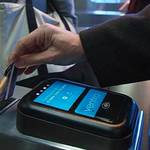 parent company of three major divisions: Cubic Transportation Systems, Cubic Mission Solutions and Cubic Global Defense. For this case, we will be focusing on Cubic Transportation Systems only.
The main businesses of Cubic Transportation Systems is the manufacturing of public transport fare reading and payment systems, and Smart Cards used by transport authorities (passenger cards). They entered this business 3 years ago.
The CEO of Cubic Corporation is unhappy with the performance of the Smart Transportation business and has asked our consulting firm to figure out what to do with the business. What areas will you explore?
Additional Information:
Provide the candidate with the following additional information when asked:
* The client Cubic Corporation also manufactures chips and custom electronic components in the US.
* They manufacture both Smart Cards and Card Readers. Their customers are primarily transport authorities, e.g. Chicago Transit Authority (CTA)
The focus is just the US market.
* If the candidate asks, the Smart Transportation business has witnessed low growth and recent customer complaints; the CEO is considering whether to spin off or sell the smart transportation business.
Possible Answers:
1. Suggested Framework
A good framework for this case should include:
* Market
* Customers
* Competition
* Company
2. Detailed Analysis
Question #1: What areas will you explore?
Possible Answer:
The candidate should consider the following factors for the smart card business to evaluate their current state and growth opportunities
* Market: Overall market size, growth rate, trends in adoption
* Customers: Customer segments, growth rate in each segment
* Competition: Who, market share, competencies
* Company: Value chain, synergies with other businesses
Candidate should also try to understand the cause for customer complaints (the candidate should not assume the cause for the complaint is price or product quality):
* Product related complaints
– Price
– Quality issues (can state a few examples)
* Service related complaints
– Delivery
– Customer service
Question #2: Our main customers are transport authorities. How would you segment them?
Possible Answer:
One way to segment the customers would be by revenue (or profit margin):
* Tier-1 transport authorities (e.g., New York, Chicago, LA, San Francisco)
* Tier-2 transport authorities (e.g., smaller cities like Cleveland, New Orleans).
Note to Interviewer: lead the candidate to size-based segmentation if needed.
Question #3: That’s exactly how the industry does it. OK, now what?
Possible Answer:
I’d like to understand how we do in these segments vs. the competitors.
Note to Interviewer: provide the following additional information.
| Segment | Smart Cards Penetration in segment | Client market share | Company A share | Company B share | Others share |
| Tier-1 (10 customers) | 100% | 15% | 40% | 45% | 0% |
| Tier-2 (70 customers) | 10% | 0% | 2% | 8% | 0% |
Question #4: What can be concluded from the data?
Possible Answer:
* We’re a weak third player in the market. Other competitors (Company A and Company B) have a significant advantage in the Tier-1 segment and we need to consider what is needed to grow market share in this segment.
* There does seem to be opportunity in Tier-2 segment but that may not be profitable to serve, considering the low existing penetration.
Note: A good candidate will realize that the low penetration in Tier-2 segment does not necessarily mean there is an opportunity — it could imply that these customers are unprofitable to serve, currently.
Question #5: What do you think are the key purchase drivers in this business? Why would a customer choose one player over another?
Possible Answer:
Note: The candidate must realize the solution here is the smart reader + smart cards and hopefully state that a dual-pricing scheme may be adopted.
The main aspects of the value proposition are:
* Reliability of technology (the most important)
* Time and cost needed for back-end database management
* Price of the solution
* Validation by prior customers (transport authorities are more likely to use a solution successfully deployed elsewhere)
* Quality of service / support
If asked, tell the candidate that all players in the market have parity on everything except reliability.
Question #6: As mentioned earlier, there have been some recent customer complaints. As a result, some of the client’s current customers are considering moving to other vendors. We have collected data on the client’s as well as their major competitors’ (Company A and Company B) reliability of technology.
* Client — Reader reliability: 90%, Card reliability: 75%
* Company A — Reader reliability: 98%, Card reliability: 60%
* Company B — Reader reliability: 99%, Card reliability: 70%
What does the data tell you?
Possible Answer:
The candidate should realize that reader reliability is much more important than card reliability since cards can be replaced easily but reader failure can shut-down the entire transport fare system.
The candidate should explore the possibility of improving reader reliability since it threatens the integrity of the transport fare system.
Question #7: Tell the candidate that upgrading the reader quality to 99% reliability will involve an investment of $20 Million. Now what?
Possible Answer:
The candidate might want to do a cost-benefit analysis, but a strong candidate will hypothesize that it may not make sense to upgrade the reader reliability to 99% since we have such a low market share and face two dominant players who already have 99% reader reliability.
Question #8: Based on this information, what do you think the client should do with the Smart Transportation business? If the candidate asks for any additional information, gently nudge them to hypothesize a solution.
Possible Answer:
A strong candidate will realize the “platform strategy” and “winner-takes-all” situation.
For Tier-1 customers, it looks like the client is worse off than Company A and Company B. The client has reliability issues and does not have a superior “value proposition” in any other respect. This is a platform strategy where the winner takes all within each geography and all Tier 1 geographies are saturated. Further, there are demand-side economies (proof of concept with more installed customer base) and supply-side economies (scale, lower infrastructure cost) that provide the competitors with additional advantages.
There might be an opportunity in the Tier-2 segment, and the client should explore this possibility. However, the Tier-2 segment could simply be unprofitable and that’s why Company A and Company B haven’t targeted a larger share.
Unless a profitable solution can be developed for Tier-2 segment, the client should exit the market and sell off assets to Competitor A or Competitor B.
Question #9: How would you find out if there is an opportunity in the Tier-2 segment?
Possible Answer:
The client should go to the Tier-2 customers and find out why they have not adopted the smart cards.
The insights from this investigation could potentially be used to develop a better solution for Tier-2 segment.
For instance, the client might find that Tier-2 customers don’t need and don’t want to pay for the full-scale product offered to Tier-1 customers and might be willing to consider a cheaper, functional system. In this case, the client should consider the possibility of providing a cheaper lite solution to the Tier-2 customers.
3. Case Assessment
What separates a good candidate from a very strong candidate in this case:
* A framework suited to this case — it has to explore the industry and competition, not profitability
* Realizing that Tier-2 segment may be unprofitable to serve
* Recognizing that smart reader reliability is more important for integrity of the smart transport fare system
* Understanding the “winner takes all” nature of this business
* Answer the original question “what to do with the business” — sell-off assets to competitor and exit.