Glendora to Shift Production from Fruit Drink to Fruit Juice
Case Type: operations strategy; business turnaround.
Consulting Firm: Cognizant Business Consulting (CBC) first round full time job interview.
Industry Coverage: Food & Beverages.
Case Interview Questions #01084: Your client Glendora Juice Co. is a medium-sized beverage company based in Monrovia, California. Their very first product line of drinks was launched in 1983 and sold in California under the name “Naked Juice”, referring to the composition of no artificial flavors, added sugar, or chemical 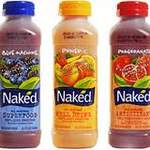 preservatives. Product line has since expanded, and their drinks are distributed nationwide within the United States.
5 years ago, the client Glendora Juice Co. earned $1 billion in sales. However, in the last 5 years, sales have gradually fallen to $800 million. Profits have also fallen from $150 million to $100 million in the last 5 years. You have been hired to determine why the client company is seeing a decline in both sales and profits and to determine what they could do differently to turn around the trend. How would you go about it?
Possible Answers:
1. Suggested Framework
The following is one of many possible approaches, remember that there are other potential frameworks.
3C’s Framework
I. Company
* Distribution channels
* Products, pricing
* Revenues/Costs
* Marketing/Advertising
II. Competition/Market
* Market is growing/flat/declining?
* Competitors — products/pricing
III. Customers
* Brand perception
* Demographics
* Changing trends?
2. Gathering Data
Additional Information: (To be provided upon request)
* The overall size of the market is $1.5 billion.
* There are 2 other main competitors in this market:
– Player B, market share $400 million
– Player C, market share $300 million
3. Detailed Analysis
Question #1: What do you think has caused the declining sales and profits for the client company?
Additional Information: (to be provided upon request)
* The client company makes 2 products only:
– Fruit Juice: 100% pure juice, healthy; accounts for 15% of sales.
– Fruit Drink: has sugar, chemicals, water; accounts for 85% of sales.
* Player B produces Fruit Juice only and revenues have increased in the last 5 years.
* Player C produces both Fruit Juice and Fruit Drink, revenues have been flat over the last 5 years.
Possible Answer:
The candidate should determine that changing consumer trends towards a healthier lifestyle has caused an increase in the sales of the healthier fruit juice product. Costs have also gone up (leading to a decrease in profits) because it is more expensive to make a 100% fruit juice than one diluted with chemicals, water and sugar. Candidate should suggest the company reposition itself to focus on Fruit Juice products.
Question #2: Consumers like our client’s brand and associate it with high-quality products. However, consumers question the client’s credibility in the healthier Fruit Juice segment. Player B’s marketing has especially been attacking the client’s credibility. What should the client do?
Possible Answer:
Candidate should brainstorm. A list of possible solutions include:
* Re-label products to emphasize 100% fruit juice, not from concentrate
* Highlight health association in marketing campaigns, advertising
* Market to parents, since kids don’t care about healthy
* Partner with fitness centers to distribute trials, promotional materials
Question #3: Profit margins on Fruit Drink are $0.25/case. Profit margins on Fruit Juice are $0.15/case. What should the client think about when determining how much production it should transfer from Fruit Drink to Fruit Juice?
Possible Answer:
The client will have to make a good case for moving production from Fruit Drink to Fruit Juice, given that the margins are $0.10/case higher for Fruit Drink. Client should conduct detailed market research to determine if the trend towards healthier lifestyles will continue in the future. Client may also consider raising prices on Fruit Juice or finding ways to reduce costs.
Question #4: Let’s say that the client is owned by a leading private equity (PE) firm who is looking to sell the company in the next 3 years. What would you tell the PE firm in regards to changing the management team?
Possible Answer:
This depends on the PE firm. Does it own other complimentary companies in its portfolio with experienced management teams in this business? If so, the PE firm should use the outside management team if it has been successful at quick turnarounds in this business area.
Question #5: Let’s say instead that the client is owned by an agricultural cooperative of 900 farmers. A big food and beverage company, say PepsiCo Inc., has offered to purchase the client at a significant premium. The farmers’ co-op is hesitant to sell. Why do you think this might be?
Possible Answer:
A big company like Pepsi has established supply sources. Pepsi may stop sourcing from the agricultural co-op, the farmers could lose profits and their jobs.
An issue of culture. The agricultural co-op does not want to “sell-out” to greedy corporate America.
Question #6: After this project, if you were to take a job with the client, what position would you want within the company and why?
Possible Answer:
This part of the case is largely open-ended. A brainstorming will give many possibilities.