Colgate Decides to Not Sponsor a NASCAR Team
Case Type: marketing strategy.
Consulting Firm: Capital One first round full time job interview.
Industry Coverage: Household Goods, Consumer Products.
Case Interview Question #00951: One of our long-term clients The Colgate-Palmolive Company (NYSE: CL) is a major toothpaste company. Other than toothpaste, the company is also engaged in the the production, distribution and provision of household, health care and personal products, such as soaps, detergents, and oral 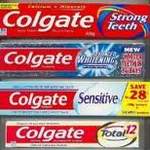 hygiene products (including toothbrushes). The company’s corporate headquarters are on Park Avenue in Midtown Manhattan, New York City.
Colgate’s president just called us because they’ve been given an opportunity to sponsor a NASCAR (National Association for Stock Car Auto Racing) team, and their chairman is very excited about it. The cost to sponsor the NASCAR team is $20M. However, the president is not so sure that this is a good idea. He’s called us to ask what are some of the things he should be considering before making a decision.
Possible Answer:
1. Gathering Information and Structuring the Problem
This is a marketing case. The candidate should take a moment to come up with a proper structure. Key elements are fit with current marketing strategy and profitability. Others such as amount of exposure/impressions work as well, but the first two should be touched upon.
Candidate should be sure to ask probing questions about the current marketing strategy:
* Customer: Candidate should explore target consumer and come to the realization that NASCAR audiences do not have a high overlap with people who make household purchasing decisions about toothpaste.
* Channels: Candidate should also explore current marketing channels, e.g., TV, radio, print, other sports opportunities, etc. Where does this fit in?
* Budget: How significant is $20M relative to the client’s total marketing budget? If not done so already, the interviewer should reveal that the client company has $500M revenue, and COGS is 50% of revenue. Let the candidate identify and estimate other components of the $500M such as overhead, selling expenses, etc., but should drive to discover that $100M (or 20%) of revenue is spent on advertising. Key Insight: $20M is a significant portion of annual marketing budget.
* Exposures – talk about how you would estimate the cost per impression (like a market sizing, but just high level approach). TV and live audience size, number of events, # of top 3 finishes, etc. Compare this cost per impression with other marketing channels.
2. Option Evaluation & Conclusion
Interviewer: We see that it is significant from a marketing budget standpoint. How would you determine whether a campaign such as this is effective?
The candidate should realize that this is the core of the case. The candidate should discuss how we could determine whether the NASCAR sponsorship will increase sales. Some ideas include looking at incremental sales, conducting market research, consumer research, benchmarking, etc.
Interviewer: It turns out that our client has a good relationship with the folks at Gillette. who also sponsor a NASCAR team for $20M. They’ve told us that they have seen incremental sales of $100M as a result of their NASCAR sponsorship. Do you think we could hit the same number? Is their approach valid?
Candidate: No, I don’t think we could hit the same number. Their consumer base is more likely to overlap with NASCAR audiences (shaving versus teeth cleaning). Also, I would need to know more about their approach to know if it’s valid.
Interviewer: They have NASCAR branded products with total sales of $100M,
Candidate: Their approach is not valid since we are thinking about sponsoring a NASCAR team to sell more of our original product whereas they are selling a new product.
Interviewer: What might be some of the issues associated with their approach to leveraging NASCAR?
Candidate:
* Cannibalizing sales of their other products (people buying NASCAR branded shaving blades as opposed to Fusion blades).
* Marketing spend required to launch NASCAR branded products.
* Alienating potential customers (those who are not NASCAR fans).
Interviewer: Taking Gillette’s results, and making some assumptions about how we would compare, how would you determine whether we should pursue this?
Candidate: I would look at ROI (return on investment). Initial investment of $20M + some other costs, such as other advertising, legal, etc. (Make sure candidate addresses that there are costs beyond the $20M, but don ‘t go in depth. Just call it X.)
For the return, I would make these assumptions (it really doesn’t matter) to come up with incremental revenue of Y. While incremental revenue is nice, what’s really important here is the incremental profit, so I would back out COGS, which makes
our ROI quite small (or possibly negative depending on the numbers and assumptions).
Note: It is not important to calculate the numbers as much as it is important for the candidate to show that they understand the various financial “buckets” and can explain ROI clearly.
Interviewer: So what would you tell the president of Colgate?
Candidate: I would recommend not doing the NASCAR sponsorship. Not target consumer, ROI is fairly low, and it’s a huge part of our total marketing budget.
Note: it is good if the candidate comes back to the implied reason why the company wanted to get involved with NASCAR: to
target this particular population (largely male, between 25-55, living in suburban and rural locations) and perhaps offers other ways to reach this market such as providing free samples at NASCAR events, placing ads in magazines targeting this particular niche, etc.