Who Would You Call If Oil Price Dropped to Zero?
Case Type: industry analysis; operations strategy.
Consulting Firm: Analysis Group first round full time job interview.
Industry Coverage: Airlines; Oil, Gas & Petroleum Industry.
Case Interview Question #00834: You are the CEO of American Airlines, Inc. (NASDAQ: AAL), a major airline headquartered in Fort Worth, Texas, United States. Operating an extensive international and domestic network, American Airlines is the world’s largest airline by fleet size and revenue, and the second largest 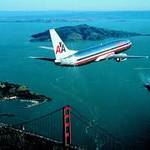 by number of destinations served, after United Airlines.
You are just informed that the price of oil has dropped to nearly $0. Basically, consider the idea that you can acquire oil as easily as you could water. Assume that there are no significant costs in transporting the oil, acquiring it, etc. Who are the first three people you would call within your organization as the CEO? Explain your motivations for contacting each of these people and what you hope to accomplish just having received this information about the price of oil.
Additional Information: to be provided to candidate after relevant questions
Would competitor airlines have access to the same low cost fuel? –Yes.
Possible Solution:
There are many solutions to this case, a good solution will have a solid upfront framework (touching on most of the major issues) and show some creative thinking.
Candidate: The 3 individuals I would contact are:
1. CFO — The goal would be to understand how our oil/fuel costs play into larger cost structure per flight. If oil were a significant portion of costs per flight, would there be an opportunity for us to lower costs and allow us to offer more competitive pricing on certain routes. Also, I know we have been taking losses on flights, so would lower costs allow us to increase capacity in order to increase revenues? Is there some difference in fuel costs between direct flights and indirect flights (1-stop or 2-stop)? Perhaps we can now afford to fly more direct flights between long distances because of lower fuel costs and gain an edge against competitors.
2. Head of Marketing Department — To better understand the current level of consumer demand for the industry and to see if there are any opportunities to add additional flights on existing routes or new routes in order to raise revenues. I would want to better understand the perceived value of direct and indirect flights and if there is opportunity for us to provide lower priced direct flights out of Chicago since that is our hub.
3. Head of Scheduler/Operations Department — To understand where exactly, in terms of our current flights and destinations, we could add flights and what cities we could better serve. Any operational aspects of our system that is inhibited by fueling costs.
Interviewer: Okay, let’s focus on your first conversation with the CFO. You mentioned that you would consider lowering your prices with your lower fuel costs. However, your competitors can then lower their prices as well and you could potentially get into a price war, further depleting your revenues. Are you sure about this? What else might you consider?
Candidate: That’s a good point, since competitors would have access to same low cost fuel and assuming they have a similar cost structure. One possibility would be to differentiate our service. For example, some competitor airlines out of Chicago likely have lower airfares than us for certain destinations, but they have 1 to 2 stops in between. American Airlines, on other hand, offers all direct flights out of Chicago (because the city is our main hub) for a slight premium. Perhaps, we can now lower our prices to compete with indirect flights prices but with the added value of a direct flight. It serves to our advantage that Chicago is our hub and one of the busiest airports in the country because this will give us huge volumes of direct flights.
Another possibility would be to consider the Southwest model for American Airlines. Now that oil is cheap, does it become economical for us to operate flights very short distances such as a Chicago to Detroit and offer a more convenient option to driving, other modes of transportation.