Cordis Responds to Competitor’s Price Cut
Case Type: business competition, competitive response; operations strategy
Consulting Firm: IMS Health Consulting Group first round full time job interview.
Industry Coverage: healthcare: hospital & medical.
Case Interview Question #00808: Our client is Cordis Corporation, a medical devices manufacturer headquartered in Fremont, California, United States. The company develops and manufacturers diagnostic and interventional products to treat patients who suffer from coronary and peripheral vascular diseases. It was founded 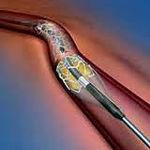 in 1959 in Miami, Florida, and today its North American operations are based out of the San Francisco Bay area. Their product lines include stents, distal protection devices, catheters, and guidewires.
Cordis Corporation’s main competitor Biosense Webster Inc. is in financial crisis. Firstly, if you were the CEO of Biosense, going through a financial crisis, what options do you have?
Possible Answer:
The interviewee should ask for clarifying questions and frame some structure to approach the case, no specific framework is recommended but the interviewee should ask for additional information about both companies to understand the situation, e.g. “I would like to know a little more about the two companies and the circumstances of the financial distress”:
- Does financial distress mean they are about to file for bankruptcy? Have they defaulted on their debt payments?
- What is the market size, market shares, who are our client’s competitors besides Biosense, is the market fragmented, etc. How has the market structure been changing? Is the market growing? What are the key success factors?
- Why is the firm in financial distress? How does its financial performance compare with our client? What is the industry profitability like?
- Are there any legal/regulatory reasons for the financial distress of Biosense?
The interviewer should provide the information below based on whether the candidate asked relevant specific questions:
- Biosense Webster is part of Johnson & Johnson (NYSE: JNJ), a big pharmaceuticals and medical devices conglomerate and Biosense manufactures coronary stents.
- Cordis has a market share of 50%; Biosense has a market share of 30% (sales volume). Give this information only if the candidate has had some conversation and explored the topic under discussion.
- Cordis is dominant among the big hospital segment.
- Biosense’s parent company Johnson & Johnson currently is under SEC investigation.
- Many of the Johnson & Johnson conglomerates business units are experiencing declining market share and profitability including Biosense.
- The parent company Johnson & Johnson has $15B debt to be paid in 10 months.
The interviewer should observe the candidate’s thinking process. Did the candidate process the information that has been given? Does he/she have a structured thinking process? Do not stop after one or two suggestions but see if the candidate can come up with at least 4-5 suggestions. Ideally, a strong candidate should bucket the options into long/medium-term and immediate options.
1. Immediate Options:
(1) Improve cash-flow
a. Improve working capital cycle
- Improve receivables, stretch payables
- Liquidate inventory (drive sales by lowering price / promotions if required, based on adequate financial analysis)
b. Cut costs
- Synergies with Parent company — G&A, manufacturing & distribution, selling & advertising, etc.
- See if you can cuts costs in labor, material, operations–probably more sticky and difficult to achieve in the short-run. Look at the cost structure of your business and ask the interviewer if he could provide more information.
c. Review planned capital expenditures
(2) Negotiate debt roll-over
2. Long-term Options:
(1) Business restructuring / Product portfolio rationalization — cut unprofitable products/businesses; divest or kill
(2) Restructure manufacturing — outsourcing?
(3) Focus on improving market position — retaining and growing market share:
- Product differentiation & innovation
- Customer focus: improve customer satisfaction by catering to their needs in time and improving customer service.
(4) Explore a merger with / sale to a competitor like Cordis.
(5) Declare bankruptcy and restructure the debt.
Question #2: Now, if you were our client Cordis Corporation’s CEO, what opportunities and threats do you see?
Possible Answer:
Some of the opportunities for Cordis:
(1) Acquire Biosense. That would give 80% market share to Cordis. but this might result in anti-trust issues from the government.
(2) Buy only some parts of Biosense that are profitable and a strategic fit to Cordis.
(3) Continue to compete as it did in past and drive Biosense out of business
- Poach sales force
- Target Biosense’s customer base
Some of the threats to Cordis:
(1) Biosense could lower prices and put pressure on Cordis’s prices and profits. The Candidate should also mention that since Biosense is in financial crisis, we have to do contribution margin analysis to see if lowering prices really helps bottom-line of Biosense.
(2) Biosense could leverage the parent company’s network to sell products to big hospitals and at the same time compete on prices and try to increase market share.
(3) Biosense could choose to focus on only the most profitable products in its portfolio and compete aggressively for those accounts.
(4) In a similar vein Biosense could choose to focus on only certain high volume customer segments and compete aggressively on price.
(5) Biosense might merge with other companies in the industry and be a stronger combined threat.
Question #3: Now, let’s do some calculations for Biosense. All numbers in the data table below are $ millions.
Revenue: 100
Cost Of Goods Sold (COGS): 50
Cost of Sales: 15
R&D: 5
General and Administrative Costs (G&A): 10
Gross Profit: 20
Profit Margin: 20%
If Biosense’s revenue increases to $120 M, how does their Gross Profit and Profit Margin look?
Possible Answer:
Candidate should provide the following analysis:
Variable Costs
- COGS will increase to $60M (20% increase in COGS from $50M)
- Cost of Sales will increase proportionally (20%) to $18M.
- Therefore, variable costs = $60M + $18M = $78M
Fixed Costs
- R&D: $5M
- G&A: $10M
Total costs = $78M + $15M = $93M
Gross Profit = 120 — 93 = 27
% Profit Margin = 27/120 = 22.5
Therefore profit margins will improve.
Revenue: 120
COGS: 60
Cost of Sales: 18
R&D: 5
G&A: 10
Profit: 27
Profit Margin: 22.5%
Question #4: If Biosense can achieve the additional $20M sales only by offering a 20% rebate on the $20M above $100M how will their profit margin look?
Possible Answer:
For new $20M revenue we have:
COGS: $10M (COGS are 50% of revenue)
Cost of Sales: $3M (cost of sales is 15% of sales).
Now revenues = $100M + 80% * $20M = $116M
COGS = $60M
Cost of Sales = $18M
Total costs are the same as above, which is $93M
Therefore, Gross Profit = $116M — $93M = $23M
% Profit Margin = 23/116 = ~20%
Revenue: 116
COGS: 60
Cost of Sales: 18
R&D: 5
G&A: 10
Gross Profit: 23
% Profit Margin: ~20%
So, even if the company Biosense offers rebate on some products, profit margins remain the same (20%). Even though the percentage margins are the same, the absolute margins are better after rebates ($23M with rebates vs. $20M without rebates). Therefore, the competitor Biosense definitely has an incentive to give rebates on prices and increase revenue. This is a threat to our client Cordis.
Question #5: Our client Cordis’s CEO does not want to lower the price of his product in response to Biosense’s offering of rebates. What should he do?
Possible Answer:
The candidate should give some creative ideas. This question tests whether the candidate can think out-of-the-box. Some possible answers could be:
- Product differentiation
- Image marketing
- Provide even better customer service
- Bundle portfolio of products that a hospital needs and sell them as a package
- Target big hospitals with high volume of orders
- Increase R&D and develop new products to keep competitive advantage
- Communicate to customers that with Biosense being in financial difficulties they are taking a risk by buying from a company which may not be able to offer a good level of service and product innovation.