Milo’s to Introduce Fresh Meat Hamburgers to Customers
Case Type: operations strategy.
Consulting Firm: Strategy& (formerly Booz & Company) first round job interview.
Industry Coverage: restaurant & food service.
Case Interview Question #00788: Your client is the owner of Milo’s Hamburgers, a regional fast-food restaurant chain based in Alabama, United States. The restaurant chain was established by Milo Carlton, who, on April 16, 1946, opened Milo’s Hamburger Shop in Birmingham, Alabama. As of 2007, Milo’s has 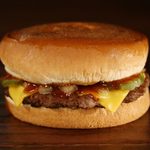 15 restaurants, 14 in the Birmingham metro area, one in Southside. Milo’s Hamburgers is known for its secret hamburger sauce and sweet tea, both included with a pie in the Mega Meal combo.
Milo’s Hamburgers has just purchased a meat-processing unit in order to introduce fresh hamburgers to the customers. Cows either walk or run into the meat processing unit to began the hamburger meat production cycle. The client is not clear whether to have the cows walk or run into the meat processing unit. Can you guide him?
Possible Answer:
1. Suggested Approach
* The first thing you want to do is to understand how much meat can be processed (the capacity) when the cows walk versus run.
* Then analyze the cost implications of the cows walking versus running.
* Next, calculate the size of the market and demand for the product.
* Finally, match demand with supply.
2. Additional Information to be provided:
- Meat is produced in a 3-step process: cow enters, meat is processed, and meat is delivered to the fast food centers.
- Each cow can make 25 hamburgers.
- The meat processing shop opens 8 hours a day, 5 days a week, 4 weeks in a month.
Only provide the following info if asked:
- If a cow walks into the meat processing unit: 10 cows can be processed in 1 hour.
- If a cow runs into the meat processing unit: 20 cows can be processed in 1 hour.
- Number of Milo’s Hamburgers chains the meat processing unit serves: 5;
- Assume each locality has a population of 70,000.
- Only one chain on each locality.
- 3 other competitors with equal market share: 25%
3. Suggested Solution
a. Understanding the capacity
- Number of hamburgers produced when the cow walks, in a month = 10 cows * 8 hour/day * 5 day/week * 4 week/month * 25 hamburgers = 40,000
- Number of hamburgers produced when the cow runs, in a month = 20 cows * 8 hour/day * 5 day/week * 4 week/month * 25 hamburgers = 80,000
b. The cost implications
Only provide the following information if asked:
Table 1: Processing and Overheads cost estimates for both the scenarios
| Cost | Walk | Run |
| Processing & Labour | 24,000 | 48,000 |
| Overheads | 20,000 | 35,000 |
| Total Cost | 44,000 | 83,000 |
| Cost per burger | 1.1 | 1.03 |
c. Demand can be estimated as follows:
Total demand per month: 5 chains × 70,000 (population served per chain) / 4 (equally distributed among competitors) * 40% (target age group) * 1 (assuming one person eat one burger per month) = 35,000
This demand (35,000) can be managed with “walk” (40,000) to maintain the freshness of meat.
Alternative Approach:
Calculate potential customers (on targeted age group): 5 chains × 70,000 (population served per chain) / 4 (equally distributed among competitors) * 40% (target age group) = 35,000
Elaborate a bit more on consumption patterns for targeted group, e.g.:
- Children: Maybe not all children are allowed to eat hamburgers? Then estimate # of hamburgers eaten per month on average
- Adults: estimate # of hamburgers eaten per month on average
An excellent response should also mention that running the cows helps to lower unit cost of meat production (costs drop by 7 cents/hamburger)
d. Make a final recommendation
Although looking through the production point of view, it seems to be worth to have the cows running into the process unit (lower unit costs by 7 cents/hamburger), the recommendation is to just to walk the cows. Analysis shows that the demand is lower than the capacity, therefore no matter whether cows are running or walking, the increase in Total Costs which results from the implementation of the running scenario is an unnecessary cost with the current demand.
As there is excess capacity and the potential for per unit cost savings when larger volumes are produced, the client should consider methods to increase demand, such as the below, to be able to leverage production economies of scale:
- Invest in marketing efforts for the burgers
- Create industry partnerships so that the burgers can be sold in more restaurants/chains.
- Rent production capacity space to a third party
Final Recommendation
Cows should walk through process unit and the client company should aim to increase market demand to be able to capitalize on economies of scale.