How to Prevent Another Hurricane Katrina?
Case Type: operations strategy.
Consulting Firm: Booz Allen Hamilton (BAH) first round full time job interview.
Industry Coverage: government & public sector.
Case Interview Question #00735: In August of 2005, hurricane Katrina hit the southern coast of the United States, turning into the most economically damaging and fifth deadliest in history. At least 1,833 people died in the hurricane and subsequent floods. Total property damage was estimated at $108 billion (2005 USD). The 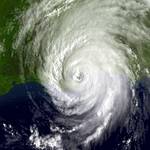 most severe loss of life and property damage occurred in New Orleans, Louisiana, which flooded as the levee system catastrophically failed. Eventually 80% of the city became flooded and also large tracts of neighboring parishes and the floodwaters lingered for weeks.
As part of an effort to prevent similar disasters in the future, the U.S. Federal Emergency Management Agency (FEMA) has approached our consulting firm in order to develop a strategic plan to help prevent such impact the next time a nature phenomenon like hurricane Katrina occurs. How might you approach this problem?
Additional Information: (Provide the following information if requested by interviewee)
The below information will help focus the interviewee on specific elements of the answer after they have had a chance to lay out their own thinking.
- Economic assistance and funds are provided at the state and federal levels.
- Federal Emergency Management Agency (FEMA) usually structures their plans in four dimensions: Preparation, Response, Recovery and Mitigation.
- Our project should concentrate on Mitigation, meaning how to mitigate the impact of future disasters.
Possible Answer:
1. Areas of Discussion
Four major areas should be discussed:
- Identify the risks.
- Assess, quantify and prioritize impacts to mitigate
- Determine plan to mitigate risk
- Implement: Training, Communication, Raise awareness
2. Recommended Conclusion
This is not a typical business case where traditional “profitability” or “introducing new product” frameworks can be used. It is important not to try to force-fit the standard frameworks, but rather think about the problem in terms of the information you were given and the problem that needs to be solved. Even more than other cases, this case does not have one single right answer; however some approaches have been discussed below.
The first phase of the case (before interviewee has been given focus on the mitigation piece) is an opportunity for the interviewee to exhibit structured thinking and sound process approach, there is no right answer. More important is whether the interviewee proposes a logical approach to the problem that covered a broad range of relevant considerations:
Once the interviewee has been told to focus on Mitigation, generally their approach should follow a sequence along the lines of: Identify, Assess, Plan, Communicate / implement.
Identify:
- List out potential natural disasters (not only hurricanes) and risks associated with each.
- Inventory of current state of infrastructure: levee, potential refugee centers (i.e. Astrodome)
Assess:
- Out of the potential disasters, consider which one is most likely and should be prioritized for planning purposes.
- Out of the risks associated with each disaster, prioritize those risks across all potential disasters that have maximum risk.
Plan:
- Raise necessary funds to invest in infrastructure, communication, etc.
- Identify key suppliers and other resources that can be mobilized in the event of emergency.
- Create a structured plan to address and communicate the risks and solutions identified.
Communicate:
- Raise awareness within the general public; as well as institutions and partners: state, federal, NGO’s, private companies, media, etc.
- Use tools such as schools, media public announcements, celebrities, etc. in order to create awareness.
- Establish a conference to gather, align and integrate all parties.
- Potential of using Global Warming awareness as an issue to further leverage message.
A Second Approach:
1) Determine the objectives and priorities of the Client (FEMA)
a. Reduce casualties
b. Reduce damage to property
2) Understand the various types of disasters that must be considered
a. Earthquate
b. Hurricanes
3) Casualties
a. Identify the most common causes of death and the number of people at risk
b. Evaluate the possible mitigating actions (prevent risk, or mitigate once risk comes to pass)
c. Implement/communicate plans
4) Property damage/other losses
a. Identify causes
b. Prioritize and plan
c. Implement/ communicate
5) Other considerations
a. Flexibility of response with changing conditions
b. Reliability of suppliers
c. Effectiveness of communication
d. Chain of command