Ashley Chemical Company to Develop New Business Model
Case Type: business turnaround; operations strategy.
Consulting Firm: Roland Berger Strategy Consultants first round full time job interview.
Industry Coverage: chemical industry.
Case Interview Question #00730: Your client Ashley Chemical Inc. is an American Fortune 500 chemical company headquartered in Covington, Kentucky. Ashley is a major U.S. chemical manufacturer in the commodity chemicals business with single digit market share. It recently emerged from bankruptcy 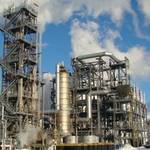 and has very limited capital available. The chemicals business is cyclical with pricing cycles of 7 years. The client is worried about how it will survive year 2015 when it hits the bottom of the pricing cycle. The question is how this company can become sustainable, if at all possible.
The CEO of Ashley Chemical has hired your consulting firm to develop a new business model, either through:
(1) acquisition into a non-cyclical chemicals market, or
(2) the manufacture of new products and services for customers, or
(3) your own recommendations.
What would you recommend?
Additional Information: (Provide the following information if requested by interviewee)
1. Competitors
The commodity chemical market is highly fragmented. A large number of competitors are either stand-alone or small in size, or are a small division of a larger conglomerate. Acquisition is difficult because of limited capital.
2. Customers
Ashley’s customers are highly fragmented, each of them purchasing no more than 10% of the client’s inventory annually.
3. Raw Materials
Your client’s raw material suppliers are increasingly turning to “greener” processes and products without increasing their total capacity. This trend is significantly reducing the supply of “non-green” raw materials which drives their cost up.
4. Infrastructure
Your client currently has 5 plants. 3 are performing well, one has been having problems of quality consistency recently and one plant has been historically a bad performer in terms of capacity utilization. All plants are over 10 years old and production is spread evenly over all the plants. (none are at full capacity)
5. Government
Increasing push from environmental groups has caused additional government taxes and regulations on shipping to be enacted recently.
6. Products
The chemical manufacturer Ashley mainly produces two chemicals: X and Y. Chemical Y is a by-product of Chemical X with a weight ratio of X = 1.5Y (each 1.5 ton of X manufactured results in the byproduction of 1 ton of Y).
| 2012 Prices per ton | 2013 Prices per ton | 2012 Costs per ton | 2013 Costs per ton | |
| Chemical X | $150 | $100 | $50 | $95 |
| Chemical Y | $175 | $100 |
The client Ashley expects to sell 100% of the chemicals manufactured. All of its plants operate below capacity; they currently manufacture 100,000 tons of Chemical X annually to meet the market demand. The pricing changes are normal.
Possible Answer:
Profit margin should be calculated, in addition to the dollar margin derived from Chemical X versus Chemical Y to determine if there is any advantage to changing the product mix.
In 2013, 100,000 tons of X are being manufactured at a profit of $5/ton, deriving a profit of $500,000 for Chemical X. The manufacturing of X results in the by-production of 100,000 / 1.5, i.e. around 66,667 tons of Chemical Y or 70,000 tons for rounding purposes. Since Chemical Y is a byproduct of X, one can assume a corresponding cost of $0/ton. The client should thereby derive a profit of $100 x 70,000 = $7,000,000 for Chemical Y, and a total profit of around $7,500,000 for both chemicals.
Comparatively, the company generated a profit of $100 x 100,000 = $10,000,000 for Chemical X in 2005, plus an additional $175 x 70,000 = $12,250,000 for Chemical Y. This amounts to a total profit of 22,250,000 in 2012, and therefore a huge loss in profit. These results are summarized in the following Tables:
| Year 2006 | Volume (ton) | Prince/ton | Cost/ton | Profit margin % | Profit margin |
| Chemical X | 100,000 | $100 | $95 | 5% | $500,000 |
| Chemical Y | 66.667 | $100 | - | 100% | $6,666,667 |
| Total | $7,166,667 |
| Year 2005 | Volume (ton) | Prince/ton | Cost/ton | Profit margin % | Profit margin |
| Chemical X | 100,000 | $150 | $50 | 67% | $10,000,000 |
| Chemical Y | 66.667 | $175 | - | 100% | $11,666,667 |
| Total | $21,666,667 |
Recommended Conclusion
This case is qualitative in nature and can take many directions.
The interviewee should first explore the root causes of the sales and profit cycles including the following topics:
- Why are costs increasing?
- Why is there a reduction in supply of raw materials and can it be addressed?
- Who are our client Ashley’s customers?
- Can the client company pass them raw material cost increases?
- What are the new government regulations’ impact?
- How efficient is manufacturing?
The interviewee should further review pros & cons of acquisition, joint venture, licensing, divesting a plant or two, and organic growth through new products/services (preferably with a pricing cycle opposite that of X and Y). The dimensions for evaluating each option should include impact on sales/profit, ROI, risk, feasibility, and timing.
In addition to organic and inorganic growth, there seems to be opportunities to improve the current business model. For example, since none of the plants operates at capacity and Chemical Y can be sold at a higher price/margin than Chemical X in the upside part of the pricing cycle, the interviewee may ask these questions:
- Can the plants increase their production of X and Y when the pricing cycle is up?
- Are there opportunities for cost reduction by increasing the volume of raw materials purchased?
- Can the more profitable chemical Y be produced in larger quantities in upside cycles?
Exploring the trend of raw materials suppliers turning to greener products:
- If the suppliers of raw materials for X and Y are switching to “greener” processes across the industry, can the client pass on the price increase along the value chain?
- Can the client use this as an opportunity to differentiate its products as “green” as well and therefore charge a premium?
Possible recommendation may include:
- Launch new products & services to differentiate from the competition, build customer loyalty, gain new customers, and leverage synergies through existing plants.
- Operating costs may increase with purchase of new materials/machinery for refining chemicals.
- Organic growth must be considered in addition to improving the client’s current business model which does not seem to be working well.
- Possible exploration into joint ventures or divesting the company.
Any number of recommendations would work for this case as long as the interviewee properly explores all of the options.