Aspen Mountain Ski Field to Build a Second Ski Lift
Case Type: math problem; operations strategy, optimization.
Consulting Firm: Kurt Salmon first round full time job interview.
Industry Coverage: sports, leisure, recreation.
Case Interview Question #00717: Aspen Mountain is a ski area located in Pitkin County, Colorado, just outside and above the city of Aspen. It is situated on the north flank of Aspen Mountain and the higher Bell Mountain at an elevation of 11,212 ft (3418 m) just to the south of Aspen Mountain. It was 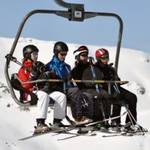 founded in 1946 as the first ski area venture of the Aspen Skiing Company, and today it is one of four adjacent ski areas operated by the company as part of the Aspen/Snowmass complex.
The Aspen Mountain ski field, with only one ski lift and one slope, has a limit of 200 skiers and is full every day. The ski lift has a capacity of 5 skiers per minute and it takes 10 minutes for the lift to carry a skier to the top of the mountain slope. Skiers take 5 minutes on average to ski down and get in the queue again.
The manager of Aspen Mountain ski field has hired you to analyze how the time that skiers spend in the queue can be reduced. There are two options: (A) increase the speed of the ski lift or (B) build another equal lift. There are no budget constraints in the decision. Which of the two options would you recommend the manager pursues?
Possible Answer:
The recommended approach to this problem is as follows:
1. Find the time skiers spend in the line (25 minutes, see below)
2. Analyze the first option: increase the speed of the ski lift, e.g. 5 minutes. That would actually increase the queue time to 30 minutes (see below)
3. Analyze the second option: build another ski lift, that would decrease the queue time to 5 minutes (see below)
4. The mountain can hold the double of skiers if another lift is built (told only if asked)
There are two methods one might take to calculate the queue time
Method 1:
Ski lift capacity * (Minutes in queue + Minutes on lift + Minutes skiing) = number of skiers / number of lifts
5 skiers per minute * (X + 10 + 5) mins = 200 / 1
| Before the change | Option A: increase lifting speed | Option B: add a second lift | |
| # skiers | 200 people | 200 people | 200 people |
| ski lift capacity | 5 skiers/min | 5 skiers/min | 5 skiers/min |
| # lifts | 1 | 1 | 2 |
| mins lifting | 10 mins | 5 mins | 10 mins |
| mins skiing | 5 mins | 5 mins | 5 mins |
| mins queuing | 25 mins | 30 mins | 5 mins |
Method 2:
| Before the change | Option A: increase lifting speed | Option B: add a second lift | |
| ski lift capacity | 5 people/min | 5 people/min | 5 people/min |
| mins lifting | 10 mins | 5 mins | 10 mins |
| mins skiing | 5 mins | 5 mins | 5 mins |
| # skiers | 200 people | 200 people | 200 people |
| # skiers on lift | 5 skiers/min * 10 mins = 50 | 5 skiers/min * 5 mins = 25 | 5 skiers/min * 10 mins * 2 lifts = 100 |
| # skiers skiing | 5 skiers/min * 5 mins = 25 | 5 skiers/min * 5 mins = 25 | 5 skiers/min * 5 mins * 2 lifts = 50 |
| # skiers queuing | 5 skiers/min * X mins = 125 | 5 skiers/min * X mins = 150 | 5 skiers/min * X mins * 2 lifts = 50 |
| Total | 200 | 200 | 200 |
| queuing time | 25 mins | 30 mins | 5 mins |
The interviewee can use another hypothesis for lift time reduction in option A; but the conclusion must be the same.
Conclusion:
Building a new ski lift is a better option for queue time reduction.
If there is time, the interviewer could ask the interviewee to brainstorm additional measures the manager might take to reduce queue time, e.g. build a cafeteria, lengthen the run, increase ticket’s price, etc.