Trader Joe’s Chain to Centralize Company’s Sourcing
Case Type: operations strategy; supply chain optimization.
Consulting Firm: A.T. Kearney first round summer internship interview.
Industry Coverage: retail.
Case Interview Question #00625: Trader Joe’s is a privately held chain of specialty grocery stores headquartered in Monrovia, California. As of February 2012, Trader Joe’s had a total of more than 360 stores. Approximately half of its stores are in California, with the heaviest concentration in Southern California, but the company 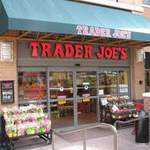 also has store locations in 30 other states and Washington, D.C. The Trader Joe’ chain has offices in both Monrovia, California and Boston, Massachusetts.
Describing itself as “your neighborhood grocery store” or “your unique grocery store”, Trader Joe’s stores sell mostly private label staple foods, organic foods, and specialty products. Unlike typical grocery stores, which may carry 50,000 items (or SKUs), Trader Joe’s stocks about 4,000 items, 80% of which bear one of its own brand names.
You are a consultant working with A.T. Kearney. The other day you were on the golf course with billionaire businessman Mr. Theo Albrecht, who owns the Trader Joe’s chain. Mr. Albrecht posed a question that you found very interesting. His question was, why should he continue to centralize his company’s sourcing rather than split it to procurement and distribution at the individual store level. How would you best assess the question?
Possible Solution:
This is a pure conceptual “supply chain optimization” case in which the candidate will have to come up with a number of reasons to go one way or the other. Be creative in the way you think about it, the case is open ended, but look for guidance from the interviewer if you start to go too far.
Candidate: May I take some time to think about how to go over this problem?
Interviewer: Sure, take your time…..So, why should he centralize sourcing and distribution?
Candidate: In order to come with an answer I would like to go over the pros and cons of centralizing and then weigh them in order to come with an answer.
Interviewer: Fine with me.
Candidate:
Pros
- Ability to “squeeze” suppliers by aggregating demand
- Flexibility to change what to deliver to individual stores based on daily or weekly demand changes
- Economies of scale in warehouse size, operation, etc.
- Reduce cost of warehouse by having it in a low cost area and not in the store, which I assume is a high cost area
- Local people (at the store level) are not trained to negotiate. Having them at the store level is an extra cost
Cons
- Local people can understand better the necessities (e.g.: because of format, size, place) for some niche categories
- If distributed directly to the store the cost of distribution is paid by the supplier
- There may be some products that are not bought at the centralized (headquarter) level because of limited size order. Managing at the store level make it viable.
Interviewer: All good reasons, but say you have talked to Mr. Albrecht about many of those things and he keeps telling you that there may be something else. What could it be?
Candidate: So, we have covered most things and we are still not finding the reason?
Interviewer: Yes.
Candidate: Looking at the ideas that I put in the pros vs. cons comparison, it could be similar to the notion of some products not being bought at the headquarter because of some quantities asked for an individual store. What if the supplier refuses to ship to individual stores because of limited volume? He may not have the trucks to do so in such a small volume or he may be unwilling to do so because is not profitable to do in that way.
Interviewer: You got to the point. This was one of the cases I worked on. After a couple of hours in the golf course with my friend I actually came to the same conclusion, which later he validated with his team as the main reason. You did a great job. Thank you for your time.