Airbus to Build New A380 Assembly Facility in France
Case Type: operations strategy; new product; supply chain optimization.
Consulting Firm: Booz Allen Hamilton (BAH) first round summer internship job interview.
Industry Coverage: aerospace & defense; airlines.
Case Interview Question #00624: Our client Airbus SAS is an aircraft manufacturing subsidiary of EADS (European Aeronautic Defence and Space Company, Euronext: EAD), an European aerospace and defense company. Based in Blagnac, France, a suburb of Toulouse, and with significant activity across Europe, 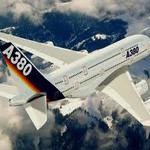 Airbus produces approximately half of the world’s jet airliners.
The A380 is a new double-deck, wide-body, four-engine jet airliner manufactured by the Airbus company. It is the world’s largest passenger airliner which is able to hold up approximately 800-900 people. For instance, the Airbus A380-800 provides seating for up to 853 people in all-economy class configurations, and the future version A380-900 will have a seating capacity of approximately 900 passengers in economy-only configuration.
Originally designed to challenge Boeing Company (NYSE: BA)’s monopoly in the large-aircraft market, the Airbus A380 made its initial flight on 27 April 2005 and entered initial commercial service in October 2007 with Singapore Airlines. Parts for the A380 airplane are manufactured in multiple sites across Europe. The client Airbus has provided us the following information on site production:
- Cockpits (flight deck, the area usually near the front of an aircraft from which a pilot controls the aircraft) are produced in Northern Spain
- The fuselage (an aircraft’s main body section that holds crew and passengers or cargo) is produced in Northern Germany
- Wings are produced in Northern England
- Landing Gears/Interior are produced in Southern France
The client Airbus has asked us to determine where it is most economical to assemble the A380 airplane. How would you go about the case?
Suggested Approach:
This is an operations strategy case with a major focus on supply chain optimization. It involves the application of processes and tools to ensure the optimal operation of a manufacturing and distribution supply chain. This includes the optimal placement of inventory within the supply chain, minimizing operating costs, including manufacturing costs, transportation costs, and distribution costs. The candidate should form a structured approach to investigate the components that make up assembly, including costs and capabilities.
Possible Solution:
Interviewer: So, how would you determine the most economical site to assemble the A380?
Candidate: Well, I would like to look into the specific costs incurred from the A380 assembly process and also determine the capabilities for assembling the planes across different locations (labor skill and supply, etc).
Interviewer: OK, I like your approach. Let’s focus on costs for now.
Candidate: Great. I assume that the major costs of assembly would be transportation, labor, and PP&E (property, plant and equipment). Also, I would think that there would be tax incentives to assembling in one country versus another.
Interviewer: Good. Let’s focus on transportation and labor for now, as these are the most significant cost drivers. What are some of the areas that you might analyze for potential assembly locations?
Candidate: I would look at the existing sites where our client manufactures parts, as well as other areas in the region that may have low cost propositions, such as Eastern European countries that may have cheaper labor costs than Western Europe.
Interviewer: Let’s take France as one location since it is the mid-point of the four manufacturing locations and compare it to the Czech Republic where labor is significantly less expensive than Western Europe.
Candidate: Well, the location in France would incur less cost because the client would already have the landing gears and interior at the facility, and would have to transport the other three parts over a shorter distance. However, the labor costs in France would likely be significantly higher than those in the Czech Republic. Do we have any information about transportation and labor costs in each of these areas?
Interviewer: Well, we have determined that labor accounts for about 70% of the total costs of assembly and transportation accounts for the other 30%. Disregard the other costs such as real estate, etc.
Candidate: Great. Since labor accounts for 70% of the cost, let’s start there. Do we have any details about how much labor costs in the Czech Republic relative to France?
Interviewer: Labor in France is 1.5 times higher than labor in the Czech Republic. What do you think that total transportation costs would be in France relative to the Czech Republic?
Candidate: Since these parts are so large, I would assume that a major part of transportation is actually packing and loading the pieces on a large truck.
Interviewer: You’re right. In fact, the marginal cost of each extra mile transported is close to zero. The most significant cost incurred is labor costs associated with the loading of parts for transportation.
Candidate: I would assume that the landing gears and interior are fairly small and wouldn’t incur as large expenses for loading/unloading compared to the wings or the fuselage.
Interviewer: You’re right. In fact, the interior and the gears are the easiest to pack of all the four parts and the fuselage is the hardest (most expensive). What would you recommend to our client Airbus?
Candidate: Well, I would recommend they assemble the A380 airplane in the Czech Republic. Since labor accounts for 70% of the total cost, and the labor in Czech Republic is about 33% less expensive than France, the client would save a significant amount of money, assuming that the skill level is constant across the two locations.
Additionally, the transportation costs would not be lower in France since the majority of transportation expense is incurred by loading/unloading the parts and the interior/gears are the easiest to pack. It might be worthwhile to analyze Germany as a potential assembly location because the fuselage represents a significant portion of our transportation costs. The transportation savings may balance out the higher cost of labor in Germany (as compared to Eastern Europe).
Interviewer: Very good. One last question — our client Airbus knows the demand for A380 jumbo jet will be 100 airplanes per year and they are trying to determine how large a new assembly facility they should build. How would you go about figuring this out?
Additional Information: (Candidate should ask for this data)
- It takes 9 months to assemble one A380 plane
- One A380 airplane requires a space of about 300 feet by 300 feet
Candidate: Well, we know that it takes 9 months or 0.75 of a year to produce one A380 airplane, so we need space to produce 75 planes in the facility (100 * 0.75 = 75). Also, one plane requires 300 * 300 = 90,000 square foot of space. So the total assembly facility would need to be 75 planes * 90,000 sq. ft. per plane = 6.75 million sq. ft.
Interviewer: Excellent. Let’s wrap it up here. (The interviewee will now be asked to summarize high level findings and make a recommendation to the client Airbus regarding where it should produce and assemble A380 airplanes and the requirements for this assembly facility and operation).