Canadian Oil Sands Concerned about Cost & Time Overruns
Case Type: operations strategy; math problem.
Consulting Firm: Schlumberger Business Consulting (SBC) final round job interview.
Industry Coverage: Oil, Gas & Petroleum Industry.
Case Interview Question #00523: The Canadian Oil Sands Limited (TSX: COS) is a Canadian company headquartered in Calgary that generates income from its oil sands investment in the Syncrude Joint Venture. Syncrude operates an oil sands facility and produces crude oil through the mining of oil sands from ore deposits. As of  January, 2007, the company holds a 36.74% interest in Syncrude, which is the largest stake of any of the joint owners.
Recently, the Canadian Oil Sands company are planning to build an oil production and refining facility in the Athabasca region of northern Alberta, Canada (Shaded regions in Figure 1 show an area where client wants to build the refinery). The estimated cost of building a facility is $5 billion and estimated time for completion is 5 years. The company is concerned about cost and time overrun to complete the project. For your information, 5 other competitors have already started building production and refining facility in the nearby areas. You have been hired as a consultant to assess the situation and make them aware of the potential issues. How would you go about the case?
Notes to the interviewer:
The objective of this case is
- To see if the candidate possesses a good clock speed, i.e. if the candidate can quickly explore several possible reasons for time and cost overruns.
- To see if the candidate presents creative solutions to specific questions posed by the interviewer and to see if the candidate can quickly do basic math.
Suggested Structure:
The case should start with the candidate hypothesizing the reasons that could lead to cost and time overruns. To guide the candidate, the interviewer may ask the candidate to list the possible steps in the project.
Question #1: What are some of the possible reasons for cost over-runs?
Possible Answers:
- Uncertainty or Changes in the field profile resulting in increased construction costs.
- Changes in price of commodities like steel and other materials used for construction.
- Environmental regulations resulting in additional investment.
- Suppliers operating at full capacities resulting in additional investment. Hence the supplier may ask the client to share some investment.
- Skilled labor shortage for construction resulting in very high salaries. This is the biggest problem in this industry and the case will focus on this problem.
Question #2: What are some of the possible reasons for time over-runs?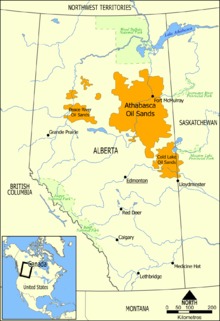
Possible Answers:
- Design and Field development planning delays
- Manufacturing lead time for machinery and equipments
- Transportation lead time for plant machinery and equipments
- Labor shortage during construction, installation and commissioning
- Poor productivity of untrained labor
- Government approvals and regulations
- Approval from environmental authorities
Notes to the Interviewer: At this stage, the case will now focus on the labor issues. Provide the following additional information to the candidate.
- The components of the oil production and refining facility are fabricated in another country, however joining the components and installation take place on-site.
- The peak demand for labor will occur in 3 years from now.
- The period sadly coincides with the peak labor demand for competitors in the same region. Especially we need several welders and we are quite sure that they can’t get welders.
Question #3: Can you think of any ideas to manage the situation?
Possible Answers:
Some possible suggestions could be:
- Automation of construction, material movement, fabrication and welding of components
- Explore opportunities to get pre-welded components from supplier
- Design components in such a way so that the need for welding itself is reduced
- Share some facilities like piping, storage etc with competitors thereby eliminating the need for separately building them
- Recruit labor from other countries (But cultural issues, immigration issues, opposition form labor unions in Canada, not many want to move to Alberta, Canada as it is very cold)
- Recruit labor from US as there seems to be a decline in manufacturing industry and hence the client may be able to obtain skilled welders
- Tie-up with technical training institutions and develop students from now onwards with a guaranteed employment after 3 years
Question #4: Ask the candidate to calculate the breakeven number of barrels of crude oil and years to break-even assuming no over runs.
Additional Information: Provide the following data when asked
| Data | Current – Without Over-runs |
| Project Cost (Fixed Cost in dollars) | $5 billion |
| Estimated production capacity (Barrels per day) | 100,000 |
| Average price per barrel of refined crude (Dollars) | $38 |
| Variable cost of production per barrel of crude (Dollars) | $10 |
| Variable cost of refining per barrel of crude (Dollars) | $13 |
| Break-even quantity (Barrels) | To be calculated by candidate |
| No. of years to break even (Assuming 330 days of operation per year) | To be calculated by candidate |
Possible Answer:
Costs = Fixed Cost + Variable Cost = $5 billion + ($10 + $13) per barrel * X barrels
Revenues = $38 per barrel * X barrels
To break even, $5 billion + $23 per barrel * X barrels = $38 per barrel * X barrels
Break even quantity X = $5 billion / $15 = 333.3 million barrels approximately
Number of years to break even = 333.3 million barrels / (100,000 barrels per day * 330 days per year) = 10 years approximately
Question #5: Ask the candidate to calculate the break-even number of barrels of crude oil to be produced and years to break even with Cost over runs
Additional Information:
| Data | New Scenario – With cost over runs |
| Project Cost (Fixed Cost in dollars) | $6 billion |
| Estimated production capacity (Barrels per day) | 100,000 |
| Average price per barrel of refined crude (Dollars) | $38 |
| Variable cost of production per barrel of crude (Dollars) | $10 |
| Variable cost of refining per barrel of crude (Dollars) | $13 |
| Break-even quantity (Barrels) | To be calculated by candidate |
| No. of years to break even (Assuming 330 days of operation per year) | To be calculated by candidate |
Possible Answers:
Break even quantity = $6 billion / ($38 – $10 – $13) = 400 million barrels
Number of years to break even = 400 million barrels / (100,000 barrels per day * 330 days per year) = 12 years approximately
Question #6: Assume there are cost over-runs. If the company wants to break-even within the same time frame we found with no over runs, what should be the price per barrel of crude oil?
Additional Information:
| Data | New Scenario – With cost over runs |
| Project Cost (Fixed Cost in dollars) | $6 billion |
| Estimated production capacity (Barrels per day) | 100,000 |
| Average price per barrel of refined crude (Dollars) | To be calculated by candidate |
| Variable cost of production per barrel of crude (Dollars) | $10 |
| Variable cost of refining per barrel of crude (Dollars) | $13 |
| Break-even quantity (Barrels) | 333.3 million barrels (no cost over-runs) |
| No. of years to break even (Assuming 330 days of operation per year) | 10 years (no cost over-runs) |
Possible Answer:
Let the price per barrel to break even within 10 years = P, solve $6 billion / (P – $10 – $13) = 333.3 million, P = $41
Question #7: Ask the candidate for a 30 second summary of his/her findings.