Whole Foods Grocery Store to Cut Tomato Price by Half
Case Type: operations strategy; pricing.
Consulting Firm: Cornerstone Research final round job interview.
Industry Coverage: food & beverage; retail.
Case Interview Question #00455: Whole Foods Market (NASDAQ: WFM) is a grocery and health food supermarket chain based in Austin, Texas, United States which emphasizes organic products. Whole Foods Market only sells food products that meet its self-created quality standards for being “natural”, which 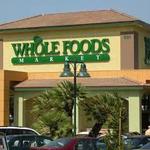 the store defines as: minimally processed foods that are free of hydrogenated fats as well as artificial flavors, colors, sweeteners, preservatives. The chain has 304 store locations as of May 2011.
Our client is the manager of a Whole Foods grocery store located in a Boston neighborhood. Recently, their supplier of tomatoes has made them an offer: the Whole Foods grocery store will get their tomatoes for half the price if they agree to sell the tomatoes to the consumers for half the current retail price. The store manager wants advice on whether to take the offer and reduce the price of tomatoes or not. If so, then how? If not, why not?
Possible Answers:
This business strategy case can be solved with several different structures (profit = revenue – cost, 3C’s, etc) or with no framework at all. This should be up to the interviewee.
1. Customers
The first issue to probe should be whether customers are price sensitive. If not, there will be little change in the market. To judge whether customers are price sensitive, the candidate should mention points like socio-demographics of the neighborhood, past price promotions on tomatoes or similar products.
Once the candidate brings it up, the interviewer should mention that there is information on past promotions and ask the candidate what information he/she needs.
It turns out that in past promotion on tomatoes with a significant price reduction, the same store sold 3 times more tomatoes.
Additional Information:
- Current retail price of 1 pound of tomatoes is $4, it will go down to $2/pound.
- Current costs are $3 per pound, will go down to $1.5 /pound.
- Current sales are 300 pounds/day, are expected to go up to 900 pounds.
Calculation: Therefore, current profit is 300 * ($4 – $3) = $300; post-promotion profit will be 900 * ($2 – $1.5) = $450.
However, it is important to look at total customer profitability with the possibility of Cannibalization of other products. We need to differentiate between new customers that might be attracted to the store due to the promotion and current customers who will switch or increase their purchases.
It is not illogical to assume that customers have a fixed budget for grocery shopping. Therefore, current customers will just switch from buying other products to tomatoes. The question is then, which products have the higher margins. The Whole Foods grocery store is expected to sell more complementary products and less substitute products.
What are the some of those products? (The interviewer should push the candidate to see how he/she thinks under pressure). — Pasta, ketchup, olive oil, garlic bread, cucumbers, peppers, onions, tomato sauce, curry, etc (assume whatever cost/benefit on complementary/substitute products).
Based on the past promotion, we have the following information on the existing sales and gross profits as well as the effect of the promotion on tomatoes sales on some other products: (data table to be handed out to candidate)
| Product | Sales ($) | Costs ($) | Gross Profits ($) | Change in profit due to promotion (%) |
| Pasta | 500 | 425 | 75 | 100 |
| Olive Oil | 300 | 240 | 60 | 80 |
| Ketchup | 750 | 525 | 225 | -60 |
| Tomato Sauce | 400 | 300 | 100 | -80 |
| Curry | 250 | 175 | 75 | -75 |
| Garlic Bread | 200 | 140 | 60 | 75 |
Calculations: Therefore, due to cannibalization gross profits will be reduced by $100 ($75 * 100% + $60 * 80% – $225 * 60% – $100 * 80% – $75 * 75% + $60 * 75% = -$103.25).
So the change in profit after factoring in cannibalization is still $450 – $300 – $100 = $50. In addition, the promotion may also act as a customer acquisition strategy by attracting new customers to the store. Therefore, it makes economic sense.
2. Competition:
Analysis of competitor is required here in this case. Assume there is only one carbon copy competitor in the neighborhood. No influence from outside the region (would someone drive 30 minutes to save $3? probably not!)
- What will the competitor do?
- Does it buy from the same supplier?
- Will the supplier offer the same deal to the competitor? (Assume only one regional supplier that gave the offer to our client first; need to sign exclusivity. Any sound and logical analysis can be accepted)
3. Company/Store
- Stocking — at the end of the promotion customers may be stocking up 1 week supply of tomatoes.
- Shelf space — if candidate has done too well so far, and you have extra time, you might want to discuss store shelf space. For simplicity’s sake, assume that the Whole Foods grocery store only sells fresh fruit and vegetables that arrive in the morning and sell until the end of the business day. The tomatoes are then displayed on shelves (assume no warehouse).
Calculation:
- Currently:
- Shelf space for tomatoes: 20 sq ft.
- Sales: $60/sq ft, Profit: $15/sq ft
- Post-promotion:
- Shelf-space: 40 sq ft have to be added (as sales become threefold)
- Sales: $30/sq ft, Profit: $7.5/sq ft
There are obviously no free shelves, so some space has to be created. Therefore other products will be taken off the shelves. If on average profits of store are $20/sq ft, what does it mean? Does average mean anything? Why not take the lowest profitability items — e.g. shoe polish items which only make $2.5/sq ft.
What will be the profitability in this case?
- Used to be: 20 sq ft * $15/sq ft = $300
- Now post-promotion: 60 sq ft * $7.5/sq ft – 40 sq ft * $2.5/sq ft = $350
Recommendation to client:
Based on our analysis, the Whole Foods grocery store should take the offer and reduce the price of tomatoes (Note: The candidate should summarize the three sources of increase or decrease in profit discussed before, and make a final go/no-go recommendation; if he/she does not, the interviewer should ask him/her to do so).
In the recommendation a good candidate should also talk about the following:
- When answering “how to go about doing it”, it is important that the candidate recognize the importance of advertising to ensure that customers will be aware of the promotion (low awareness => no change in sales).
- Advertising is also necessary to attract new customers. Again, it is necessary to check the capabilities of the Whole Foods store to take on more customers in terms of space, labor etc.