Facing New Regulations, LifeSouth to Raise Price
Case Type: business turnaround; improve profitability; pricing.
Consulting Firm: ClearView Healthcare Partners first round full time job interview.
Industry Coverage: healthcare: hospital & medical; non-profit organization.
Case Interview Question #01309: Our client LifeSouth Community Blood Centers is a major blood bank with operations in five southern states (Tennessee, Mississippi, Alabama, Florida, and Georgia), providing blood supply for more than 120 medical facilities in these five states.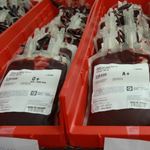
The client collects blood through blood drives at locations like schools and offices. The blood bank has one processing center in each of the five states where the blood is sent for testing and treatment. The blood is then transported to hospitals to be used. Only around 80% of the demand for blood is met, and hospitals often share blood among themselves although transportation is expensive.
Our client LifeSouth Community Blood Centers has been losing money for some time. The CEO has brought in our consulting firm to understand how they can turn around the business, improve their profitability, and prioritize their next steps. What would you recommend?
Additional Information: (provide only if corresponding questions are asked)
* Does the client face competition in its markets?
– Yes, in each state where it operates there are other blood banks.
* How long has the client been experiencing losses?
– For several years.
* How great are the losses the client is facing?
– No information available.
* Are there any substitutes for human blood?
– No.
Possible Answers:
1. Suggested Framework & Structure
Profitability
(1) Internal Factors (Profitability Tree)
I. Revenue
* Price (flexibility?)
* Quantity sold (unmet demand?)
II. Costs
* Fixed Costs
– Processing facilities
– Labor
– Overhead
* Variable Costs
– Procurement
– Transport
– Sales force
(2) External Factors
* Competitive pressure
* Customer willingness to pay
* Lack of supply
* Changes in Regulation
As the candidate walks through the framework, the interviewer should tell the candidate that there have been changes in regulation that require the blood to now be purified to a higher degree. These will come into effect at the beginning of the next fiscal year.
The candidate should be probed to get insights on competitive pressure, price elasticity of demand for blood and the shortage of blood supply (see below “Key Insights”). The interviewer should mention there is no possibility of increasing supply AFTER the candidate explores the possibility of increasing quantity sold.
The interviewer should steer the candidate away from discussing cost cutting, since the client has no scope to cut costs further.
2. Key Insights from framework
* Competition:
Even though the blood bank faces competition, the candidate should recognize that because only 80% of the demand for blood is met, competition cannot be causing price wars. The candidate should be told that we have no further information about the competitors.
* Customer’s willingness to pay (price elasticity):
Blood is in high demand and short supply, therefore demand is not price-sensitive.
* Supply of blood:
Ideally the candidate should brainstorm ways to increase the supply of blood — e.g. raising awareness, increasing blood donation frequency, etc. The interviewer should encourage brainstorming, and then tell the candidate that blood supply is fixed.
* Regulations:
The blood donation process is heavily regulated and the candidate should identify regulatory changes as a potential external factor that could affect profitability. The interviewer should prompt the candidate if they do not identify regulatory issues independently. They should then be told about the regulatory changes requiring more purification; a strong candidate will recognize that this impacts all competitors and is putting upward pressure on processing costs.
* Costs:
The candidate expected to propose costs as a potential way to increase profit while talking through the framework. Interviewer should share that there is no scope for cost-reduction.
* Path forward:
The candidate should propose exploring the profit side of the profitability tree, as there is no scope for cost-reduction. The interviewer should then ask them to first take a step back and consider the current profitability situation (see Question #1 below).
3. Detailed Analysis
Question #1: How do we know if the client is breaking even, and what is the extent of their current losses?
Additional Information to be provided (if asked):
* Fixed costs: $15M annually
* Variable costs: $80 per unit
* Units sold: 400K annually
* Price per unit: $100
Possible Answer:
Breakeven calculation:
* Number of units sold = 400K
* Contribution per unit: $100-$80 = $20 / unit
* Units needed to break even: $15M fixed costs / $20 contribution per unit = 750K units annually
* Gap to breakeven: 750K units needed — 400K sold = 350K
Current financial situation:
* 400K units * $20 contribution = $8M
* $8M contribution – $15M fixed costs = ($7M) loss annually
Key Insights:
* The client is selling 350K fewer units than necessary to break even, and is losing $7M annually.
* The candidate should realize that, as there is no scope to reduce costs or increase blood supply, they should evaluate whether prices can be increased.
Question #2: How much does the client need to increase the price to break even?
Possible Answer:
Calculation:
* Number of units sold = 400K
* Per-unit contribution needed to break even = $15M fixed costs / 400K units sold = $37.50
* Current contribution = $20/unit
* Additional contribution needed = $37.50-$20 = $17.50
Key Insights:
* The client can break even at 400K units sold annually with an increase in contribution of $17.50 per unit, to $37.50 contribution in total. If we can assume the same costs, this would mean an increase in price to $100 + $17.5 = $117.50 per unit.
* The candidate should then move towards discussing whether a 17.5% price increase is feasible, and request information about customer willingness to pay or overall hospital costs.
Question #3: Are hospitals likely to pay the increased price of $117.50?
Additional Information to be provided (if asked):
* On average, hospitals use 2.5 units of blood per surgery. Assume no other usage of blood.
* Total cost of an average surgery is $40K.
Possible Answer:
Calculation:
* Current blood cost to hospital per surgery = 2.5 units * $100 / unit = $250
* % of blood cost per surgery = $250 blood cost / $40K total cost = 0.625% (can round to <1%)
Key Insights:
* Blood supply represents a very small percentage of total cost of surgery; hospitals should not be severely impacted by the marginal price increase.
* Furthermore, given the limited supply of blood, there is no danger of losing customers to competition due to a price increase.
Question #4: Once the new regulation requiring a higher degree of blood purification comes into effect, what does the client need to do to break even?
Possible Answer:
The candidate should have identified earlier that the new regulations will result in an increase in variable costs and potentially fixed costs (new equipment for purification, etc) — if they do not suggest discussing how to change price as a result, point them in this direction.
Additional Information to be provided (if asked):
* Fixed costs: Same
* Variable costs: 10% increase
* Units sold: Same
Calculation:
* Number of units sold = 400K
* Contribution per unit to break even = $37.5 ($15M/400K)
* Previous variable costs = $80 per unit
* New variable costs = $80 * (1 + 10%) = $88
* New price to break even = $88 in variable costs + $37.5 contribution = $125.5 / unit
Key Insights
* The client needs to raise prices by 25.5% to $125.50 per unit to break even once the new regulations come into effect.
* This should be feasible given the previous analysis of the cost of blood as compared to overall operating costs.
* Additionally, all competitors will experience similar increases in costs. The sales team can explain the price increase is necessitated by the new regulations.
Question #5: Can you wrap up the case with a recommendation to the CEO?
Possible Answer:
A good recommendation should include:
* Price of blood needs to be raised by 25.5% to $125.50 per unit to break even once the new regulation kicks in.
* Potentially there is room for increasing the price even more, given the price inelasticity and unmet demand, which would allow the client to make a profit.
Potential risks to consider:
* There is no serious risk to reasonable price increases given that blood is in short supply.
* There could be some reputation damage if prices are raised significantly out of line with competition.
Next steps:
* An immediate price increase of 17.5% could prevent further losses.
* The client should determine a target for profit margin after the new regulations take effect and set the appropriate pricing strategy.