Precision Drilling to Offer One-day Replacement Guarantee
Case Type: improve profitability.
Consulting Firm: Ernst & Young (EY) Advisory first round full time job interview.
Industry Coverage: oil, gas, petroleum industry.
Case Interview Question #01252: Your client is Precision Drilling Corporation (TSX: PD), one of the largest drilling rig contractors in Canada. Headquartered in Calgary, Alberta, the company’s operations expanded from 3 drilling rigs in 1984 to over 400 drilling rigs and worldwide operations.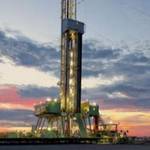
The boom in oil production has made the client Precision Drilling quite successful and the company’s stock has just hit all-time highs. At the recent shareholder meeting, the CEO promised that profits would continue their upward trend in the upcoming year. At the same time, he promised that the advantage that the company would build would be sustainable in the long term. How can this company achieve both goals?
Possible Answers:
1. Case Overview
Very little information about the actual business of the client Precision Drilling was given in the introduction to the case and as such, the candidate will need to dig more into what exactly they do, and understand the company and the industry before making recommendations on profitability.
Suggested Framework: profits = revenues – costs
Once they dive into revenues and costs, they will find that there is no room for improvement on costs and will move to revenues. Since most candidates’ first instinct will be to look at increasing volumes, they will likely look at increasing utilization or the number of drilling rigs. Lead them through the calculation on purchasing a new rig. Once they discover that this is not a profitable strategy, they should suggest raising prices. This will lead them through the remainder of the case.
2. Information Gathering
Additional Information: only give to candidates if requested
* The client Precision Drilling Corporation owns oil drilling rigs, which it rents out to major oil companies on a daily rental rate.
* The oil industry is one of Canada’s largest industries and is dominated by three major integrated oil companies — Suncor, Husky, Imperial Oil.
* These oil companies extract hundreds of thousands of barrels of oil per day and as such, being unable to drill due to the breakdown of a drilling rig without an immediate replacement would cost them over $10 million per day.
* There are 5 other drilling companies offering similar services as Precision.
* Competition is not very fierce as very high demand from the oil companies means all of the competitors are able to be highly profitable.
* The utilization rate of 80% is necessary to ensure that Precision can replace defective rigs in a reasonable amount of time — currently it takes one week between the rig breaking down and replacement with another.
* Precision Drilling currently has $8,000 in variable costs per rental day, broken down into 10% labour, 50% fuel, 20% transportation and 20% repairs and insurance.
* Precision Drilling also has $100 million in annual fixed costs.
* Assume that all costs have been optimized and thus there is no scope for cost improvement.
* Purchasing a new drilling rig will cost $5 million to be depreciated over 10 years.
* The new drilling rig will have the same variable costs as the existing rigs and will also incur a $100,000 administration fixed cost per year.
* Assume utilization rates on the new drilling rig are the same as on existing ones.
* Prices could be raised to $12,000 if Precision gave a guarantee of one-day replacement of broken-down rigs.
* This guarantee will not change costs, but will require utilization rates to fall to 70%.
3. Detailed Analysis
When the candidate begins looking at Precision’s business model, prompt them to create a model for the company’s revenues. The answer they should arrive at (with guidance if needed) is:
Annual Revenues = Days in Year * Number of Rigs * Utilization Rate * Daily Rental Rate
Then, tell the candidate that Precision has 400 rigs, a utilization rate of 80% and a daily rental rate of $10,000. Finally, tell them to assume it has 350 working days in its operating year.
Annual revenues per rig = $10,000/day * 350 days * 80% utilization rate = $2.8 million per year
The candidate should calculate that each rig earns $2.8 million in revenues per year, and the company earns a total revenue of $2.8M * 400 = $1,120 million ($1.12 billion).
Next, when they are looking at the profitability of adding a new rig, they should perform the following calculation.
* Revenues: $2.8 million per year (same as existing rigs)
* Variable Costs: $2.8 million * 80% (costs are $8,000 per operating day, versus $10,000 in revenues) = $2.24 million
* Gross Margin: $2.8M * 20% = $560,000
* Fixed Costs: $600,000 ($5 million in depreciation divided by 10 years, plus $100,000 in administration cost)
* Profit: $560,000 – $600,000 = ($40,000)
After this, when the candidates look at the possibility of raising prices, first challenge them to think of ways to justify price increase. The key insight is the enormous cost to customer of missing even one day of drilling.
* Prices could be raised to $12,000 if Precision gave a guarantee of one-day replacement of broken-down rigs.
Re-calculate gross margin:
* New Revenues per rig: $12,000/day * 350 days * 70% utilization rate = $2.94 million per year
* New Costs per rig: $8,000/day * 350 days * 70% utilization = (2/3) of revenue = $1.96 million
* New Gross Margin: $2.94M – $1.96M = $980,000
A stellar candidate will note that this higher gross margin now makes it profitable to purchase new rigs for the fleet. Thus raising prices may not need to be accompanied by lower volumes of drilling days if additional rigs are purchased to accommodate the lower utilization rate.
4. Conclusion & Recommendation
* Our initial analysis showed that the client Precision Drilling should offer a guarantee of one-day replacement of a broken-down rig as this will allow a price increase from $10,000 to $12,000 per day.
* Since this will push gross margin per rig above the $600,000 fixed cost of acquiring a new rig, the company will then be able to acquire new rigs for the fleet.
* The current utilization rate of 80% implies that 320 rigs are being used at any given time. Thus increasing the fleet to around 450 rigs will make this same usage level possible, even though utilization will need to fall to 70%.