Bird Construction to Raise Price of Road Maintenance
Case Type: improve profitability.
Consulting Firm: PricewaterhouseCoopers (PwC) Advisory first round full time job interview.
Industry Coverage: engineering, construction.
Case Interview Question #01251: Your client Bird Construction Inc. (TSX: BDT) is a general contractor engaged in providing construction services in Canada and the United States. Headquartered in Mississauga, Ontario, Canada, the company focuses on projects in the industrial, commercial as well as institutional sectors of the general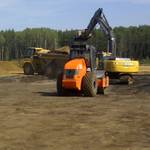 contracting industry.
The client Bird Construction released their 2014 Q1 quarterly reports yesterday and analysts were shocked that despite recovering industrial demand, Bird Construction’s profits had fallen substantially. The resulting sell-off of their shares wiped out nearly $50 million of value. With their stock options at risk of falling out of the money, the senior executives of Bird Construction have turned to your consulting firm for help. What will you do?
Possible Answers:
1. Case Overview
Since this is a profitability case, the candidates should propose looking at both revenues and costs to determine what caused the profitability decline. Once the candidates realize that it was due to costs, they should look more deeply at what costs rose most significantly. Once they see that it is due to unusually high raw materials costs in the New Roads segment, they should propose a course of action.
2. Information Gathering
Additional Information: only give to candidates if requested
* Client’s revenues
– Total revenues in 2011: $140 million.
– Total revenues in 2012: $165 million.
– Total revenues in 2013: $220 million.
* Revenues in the Road Work segment rose overall across all three years.
* Miscellaneous work makes up a negligible portion of revenues and profits, so it is not worthwhile investigating.
* There are three other construction companies in the industry and jobs are allocated through a competitive bidding process.
* Bidding is handled through a separate department from general finance at Bird Construction and this department is evaluated on the number of bids that they successfully win.
* Assume rent on machinery is proportional to labour time and this cannot be changed.
* New roads take on average three times as much time and materials to build per kilometer as maintenance.
* New roads use a different mixture for the asphalt than maintenance as the mixture gives the roads the dark look people expect out of a new road.
Exact figures for cost breakdown: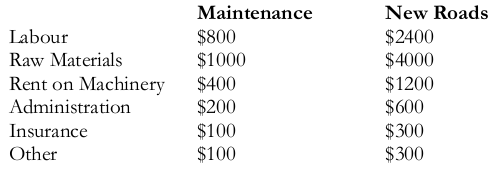
Asphalt Mixtures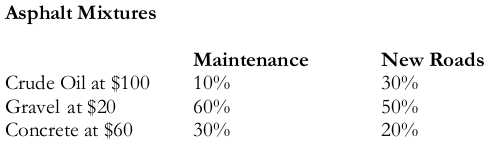
EXHIBIT 1. Bird Construction Average Price Chart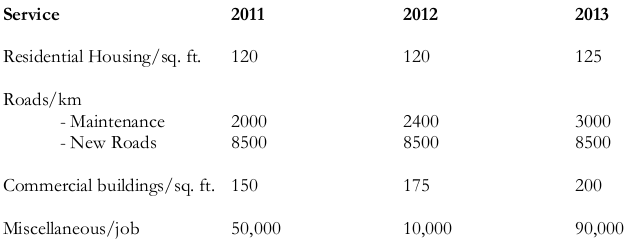
EXHIBIT 2. Construction Volumes By Year
A. Buildings Square Feet Contracted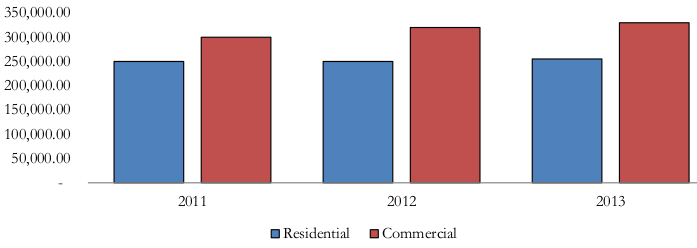
B. Road Work in Kilometers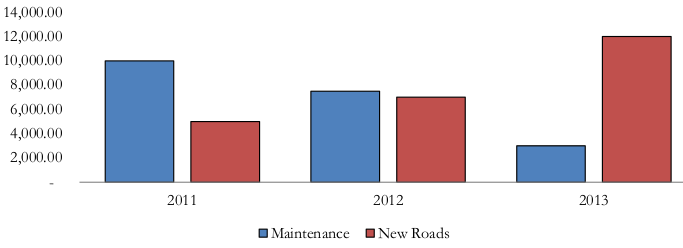
EXHIBIT 3. Roadwork Cost Data
A. Maintenance Costs Per Kilometer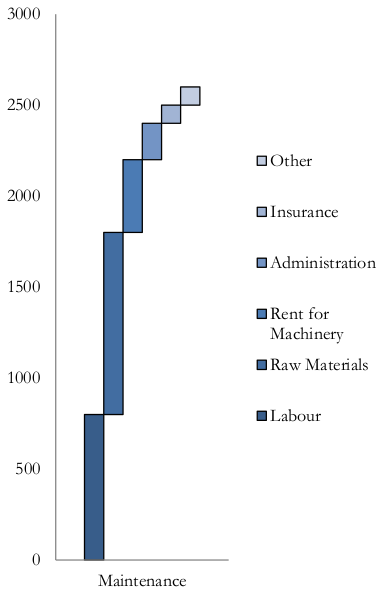
B. New Roads Cost Per Kilometer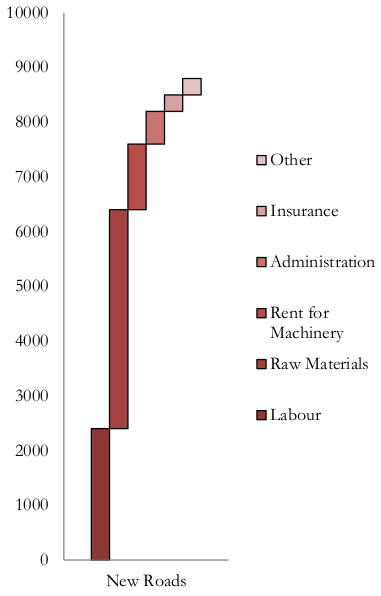
3. Detailed Analysis
From Exhibits 1, the candidate should see that the issue is not with pricing as no prices have substantially declined and most have actually risen.
From Exhibit 2, the candidate should disregard the “Buildings” segment as volumes increased fairly steadily through all three years. However, in the “Road Work” segment, they should notice that while maintenance work has sharply declined, new road work has sharply increased. They should conclude that either the total revenues have fallen as a result of this switch or the profit margins are different across the two divisions. Once they learn that both overall revenues and road work revenues have increased, they should ask to see the costs within these segments.
From Exhibit 3, the candidate should notice two things: first, the total cost per kilometer for new roads is actually greater than the revenue earned per kilometer, which is the major driver of the fall in profitability; second, raw materials make up a larger portion of costs in new roads than in maintenance. Ask them to estimate the amounts for the major categories before giving them the precise data.
Once they have the exact numbers for costs and the information that new roads should cost triple what maintenance does, they will see that raw materials costs more than it should.
After getting the asphalt breakdown, they should calculate an average cost per unit
* Maintenance = $100 * 10% + $20 * 60% + $60 * 30% = $40
* New Roads = $100 * 30% + $20 * 50% + $60 * 20% = $52
* New Roads/Maintenance = $52/$40 = 130%
Thus per unit, new roads cost 30% more than maintenance (assume there is some efficiency loss as well that accounts for the remaining difference).
4. Conclusion & Recommendation
We identified that the major driver of the profit decline is that new roads cost more per kilometer than we are bidding to build them for. A possible course of action would be:
* First, we should change how we evaluate the bidding department, so they are incentivized to make profitable bids, rather than bid low in order to win contracts.
* Second, we should likely change the mixture used for new roads, as this will reduce the cost of raw materials to $3,100 per kilometer and boost profits by $7.65 million.
* Finally, since new roads cost more than triple to build, we should raise the minimum price that we are willing to bid to at least triple the price of maintenance.