Air Canada to Focus Its Freight Operations on Belly Freight
Case Type: improve profitability.
Consulting Firm: Kaiser Associates first round full time job interview.
Industry Coverage: airlines.
Case Interview Question #01167: One of our clients, Air Canada (TSX: AC), is the flag carrier and largest airline of Canada. With its corporate headquarters located in Montreal, Quebec, Air Canada provides scheduled and charter air transport for passengers and cargo to more than 300 destinations worldwide. 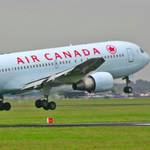 It is the world’s eighth largest airline by fleet size.
The year is 2017. The CEO of Air Canada has come to our consulting firm with a problem. Over the last three years (from 2014 to 2016) they’ve noticed that while their business has been doing well, their profitability seems to be stagnant. They have come to us to try to determine what the issue is and how they can correct the problem. How would you go about the case?
Possible Answers:
1. Case Overview
The candidate should take 1-2 minutes to draw out a framework, outlining the possible issues. Then the candidate should use his/her framework to ask clarifying and exploratory questions geared towards identifying those issues that are key to this particular case.
2. Additional Information
The following additional information can be provided as the candidate asks exploratory questions.
Business segments: A first step for the candidate could be to find out in which business segments the client operates.
* The two main areas of business for Air Canada are its passenger business and its freight business. Further questioning should establish that the airline has had the following financial results (note that you should only provide the following results once the candidate has established that the freight and passenger businesses are the two main businesses for the airline).
Table 1. Company financials from 2014-2016
| Year | 2014 | 2015 | 2016 |
| Passenger Revenues | $300 million | $375 million | $450 million |
| Passenger Profits | $140 million | $165 million | $190 million |
| Freight Revenues | $212.5 million | $225 million | $275 million |
| Freight Profits | $200 million | $190 million | $120 million |
3. Detailed Analysis
After reviewing Table 1, it should now become clear to the candidate that the problem the airline is facing lies in the freight business and not the passenger business. If the candidate continues to press with the passenger business the interviewer can allow him/her to continue down that road, but eventually should inform them that the client essentially believes the passenger business is growing both on the revenue side and the profit side and is not a major issue.
Once the candidate has established that the freight business is the issue, the interviewer should provide the candidate with the following information when asked for more information about the freight operations:
Additional Info provided to the candidate by the interviewer:
* There ore two main types of freight: belly freight, which is carried in the bays of the planes that are operating as passenger jets, and freighter freight, which is carried on specially-designed freighters.
* With the exception of live animal freight, which is an inconsequential portion of this airline’s overall business, all types of freight can be carried on either freighters or passenger planes.
* Passenger planes typically have about 35% of the room of the freighters.
After the provision of this information the candidate should begin to recognize that there might be a problem with the usage of freighters and passenger jets to carry the freight. He or she should begin to see that the belly freight is a substitute for freighters themselves. After coming to that realization (or before) the candidate should ask for some information about the profitability of belly freight versus freighter freight.
Additional Info provided to the candidate by the interviewer:
* The cost per ton of belly freight (i.e. the incremental cost to the airline) is approximately 20% that of freighter freight.
* The time to deliver belly freight is approximately 10% longer than that of freighter freight.
* The destinations served are actually greater with belly freight flights than with freighter freight.
* They operate out of the same airports, although separate personnel are required to operate freighter freight flights.
* If belly freight or freighter freight capacity goes unoccupied, it is non-revenue generating (i.e. nothing else is carried in that space).
At some point the candidate should begin to inquire as to what has happened over the past couple of years.
Additional Info provided to the candidate by the interviewer:
* As it turns out, the airline has quadrupled their number of freighters from 3 to 12 over the past 3 years. Further they have added new freighter flights. This has led to the usage of the freighters’ capacity on each flight to drop from 85% to 45%.
* At the same time, the number of passenger flights has doubled and the number of destinations served via passenger flights has increased by 1/3. Belly freight capacity usage however has dropped from 85% to 60%.
If the candidate asks about profit margins, the interviewer can tell the candidate that:
* The total cost for a freighter freight flight averages $400,000 per flight and for passenger flights they are $600,000 (regardless of the freight carried). Further, revenues for each flight from the freight move on a sliding scale based upon how full the planes are:
Table 2. Freight revenues per flight
| Freight usage: | 25% | 50% | 75% | 100% |
| Passenger (freight revenues per flight) | $150,000 | $300,000 | $450,000 | $600,000 |
| Freighter (freight revenues per flight) | $200,000 | $400,000 | $600,000 | $800,000 |
Calculations:
| 3 years ago | present | |
| # of freighters | 3 | 12 |
| Usage of freighters capacity | 85% | 45% |
| Revenues per freighter flight | $800K * 85% = $680K | $800K * 45% = $360K |
| Costs per freighter flight | $400K | $400K |
| Profit/Loss per freighter flight | $680K – $400K = $280K | $360K – $400K = -$40K |
Although the candidate can go ahead and put numbers to paper, the clear conclusion from this is that the airline has engaged in a costly freighter expansion project when it wasn’t truly necessary. In fact the airline is now making a loss of $40,000 per freighter flight on average whereas it used to make $280,000 per flight in profit. Further, much of this freight could be carried in the belly of the planes and would result in a cost free incremental profit to the airline.
4. Recommendations
The candidate’s final recommendations could include:
* The airline should refocus its freight operations on belly freight.
* It should charge a premium for express packages for which the 10% additional time savings gained by using a freighter is crucial.
* It should sell off or terminate the leases of some of its freighters.
* It should consider adding more passenger flights as the demand seems to be picking up for these. Further, by adding more belly freight the profitability per flight should increase.
* If it can trim its freighter operations the airline facility/personnel costs should decline.
* The candidate should raise the point that the airline could try and go out and become a leader in the express freighting business, but that this would be an expensive endeavor and is risky.
* The airline should consider entering into agreements with other freighter companies in order to share usage of planes and personnel in an effort to cut costs/maximize usage.