New Balance to Offer Discounts on Fastest Moving Popular Shoes
Case Type: improve profitability.
Consulting Firm: Cornerstone Research first round full time job interview.
Industry Coverage: apparel, clothing, textiles; retail.
Case Interview Question #01072: Your client New Balance Athletic Shoe Inc., best known as simply New Balance, is an American footwear manufacturer based in the Brighton neighborhood of Boston, Massachusetts. The company was founded in 1906 as the “New Balance Arch Support Company” and currently is one of 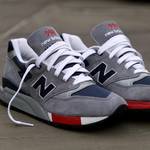 the world’s major sports footwear manufacturers.
The client New Balance runs a national chain of shopping mall-based retail stores that specialize in athletic shoes (sneakers, cleats, etc.) and also carries sporting apparel (hats, t-shirts, sweatshirts, pants, shorts, etc.). There are two other mall-based athletic shoe retailers who are very similar to your client in terms of size, product mix and strategy: Puma and Adidas. Your client New Balance informs you that their profits are declining and wants you to determine why and recommend a strategy to deal with it. What would you recommend?
Additional Information: (to be provided if interviewee asks probing questions)
* Sales are down at all three shopping mall-based retailers, but sneaker industry sales are up overall.
* Costs have increased, but all increases have been passed along to consumers to maintain margins.
* Non-traditional competitors have emerged who offer lower prices but no service.
* Customers fit into two segments: “users” and “fashionites.”
* “Users” represent 40% of sales and seek out durable products and knowledgeable salespeople.
* “Fashionites” comprise the remaining 60% of sales and want to look good in the hottest new sneakers, but are more price conscious than the “users”.
Possible Answers:
Profits have decreased, so we use the profitability equation, Profit = Revenue – Cost = (Price * Quantity) – (Fixed Cost + Variable Cost). A simple 3 C’s analysis will also help bring out the key issues:
* Company: What are the client company’s core strengths?
* Competition: Who is the real competition and what are they doing differently?
* Customers: What customer segments do we compete for and what are their unique needs?
Costs have gone up, but so has price, so margins are relatively unchanged. Profits have decreased, so quantity must have decreased also. Sneaker sales are up overall, but have decreased in the malls so the other distribution channels must be stealing share. The other distribution channels must be identified and analyzed in terms of their value propositions (price, selection and service).
It turns out that discount stores like Wal-Mart and Target offer lower prices, but little variety and no service. Shopping mall stores offer good service but charge higher prices to cover their higher costs. The “users” depend on variety and quality service and have remained loyal to the shopping mall-based stores. Discounters do stock the hottest shoes at lower prices, so they must be stealing market share among the more price conscious “fashionites” who don’t care about service.
Since the shopping mall-based retailer depends on both segments to survive, it cannot cut back on service for the “users”. It can, however, manage its inventory more effectively to offer discounts on the fastest moving “hot” shoes. Since the “fashionites” are likely to be in the shopping malls for other needs, they should be able to draw “fashionites” back into the stores. Losses due to the discounts on these shoes can be offset by increased volume, rapid turnover and complementary sales on sporting apparel like t-shirts and accessories once these customers are in the store. The prices do not need to match the discounters since the shopping mall-based store benefits inherently from mall based traffic and can charge a slight premium for the convenience of location.