SuperValu Stores to Increase Deodorant Profitability
Case Type: improve profitability; math problem.
Consulting Firm: McKinsey & Company first round full time job interview.
Industry Coverage: cosmetics, beauty products.
Case Interview Question #00924: The client SuperValu, Inc. is a large national retailer. The corporation, headquartered in the Minneapolis suburb of Eden Prairie, Minnesota, has been in business for nearly a century. It is the fifth largest supermarket chain in the United States (after Kroger and Albertsons). In addition to grocery, food 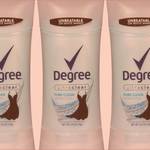 and drinks, SuperValu also sells consumer products and household goods in their stores.
Recently, the client SuperValu has asked you to look into their deodorant category, which had sales of $500 million last year. The deodorant category has been profitable but the client has recently learned that their deodorant category’s profitability is below the industry average. Specifically, the client SuperValu wants to know:
(1) Why is the client’s profitability of the deodorant category lower than the industry average?
(2) If possible, how can the client increase this category’s profitability?
Possible Answer:
1. Note to the interviewer
The trick to this profitability case is that the client has the same profitability per deodorant brand it sells compared to the competition, but the client gets majority of its sales from the least profitable brand (Axe). The client also does not have a Private Label deodorant, however the Private Label typically has a high profitability. Everything else in the discussion with the candidate can be made up but it needs to be aligned with the insights below. For example, the competitors are growing deodorant sales at 5%/year just like the client does.
If the candidate asks if the client wants to match the profitability of the other competitors, answer that we do not know the profitability of each competitor.
If the candidate asks if the client wants to match the average profitability of the deodorant category that the rest of the market has (this can be calculated from the Exhibits), answer that the client is most interested in growing the profits fast instead of matching some targeted profitability.
2. Case Opening
After the candidate structures the case, ask some probing questions as appropriate. Look for connection to the Hypothesis he/she stated.
Part 1: ask the candidate to study the data in Exhibit 1 and share what he/she observed.
Exhibit 1, Vendor sales mix – % of revenues
| Axe | Degree | Old Spice | Gillette | Right Guard | Private Label | |
| Client’s Stores | 55% | 10% | 17% | 10% | 8% | 0% |
| Rest of Market | 35% | 20% | 25% | 10% | 3% | 7% |
Insight 1: the majority (55%) of the client’s sales in this category comes from a single brand (Axe).
Insight 2: the client does not have a Private Label deodorant as the competitors have.
Insight 3: apart from these two, often the client has a different percentage of sales (often substantially different in relative terms, e.g., Degree, Right Guard) coming from the rest of the brands compared to the rest of the market.
This should lead the candidate into asking for profit margins for each brand which is essentially Exhibit 2.
Part 2: ask the candidate to study the data in Exhibit 2 and share what he/she observed.
Exhibit 2, EBIT as a percentage of sales
| Private Label | Degree | Old Spice | Gillette | Right Guard | Axe | |
| Client’s Stores and Rest of Market | 35% | 40% | 16% | 27% | 38% | 15% |
Insight 4: Axe brand has the lowest profitability (15%) while it represents 55% of the client’s sales. This is not good for maximizing profit from the deodorant category.
Insight 5: the key to the client’s problem is the sales distribution between different brands. The client should decrease the sales of the less profitable brands and increase sales of the more profitable brands.
Insight 6: two brands that the client has a lower percent of sales when compared to the rest of the market are Degree and Private Label; however, these are the two brands that have very high to highest profit margins.
Note: Private Label would be the client’s own label which the client would need to start selling after some homework on how to make/source it and introduce it to the market. This could be a good point of discussion with the candidate.
Ask the candidate: How to start selling its own Private Label deodorant? What needs to happen? For example: find a manufacturer that wants to supply deodorant to the client for the Private Label sales, hopefully find a manufacturers that is already making popular smells for other brands (since often there are a few manufacturers that make most of the deodorants and other brand names simply source the material from them), make the new product introduction plan, where to do it first since the client is a large national retailer, promotions, shelf space and positioning, etc.
Insight 7: Right Guard also has a high profit margin but the client already has a higher percentage of Right Guard than the rest of the market so the client should likely not focus on this brand as it might be hard to increase its percentage of sales further. Better focus on the low hanging fruit. However, increasing sales of Right Guard could be an interesting point of discussion with the client.
Insight 8: the other two brands (Old Spice and Gillette) also have lower margins so it is better not to focus on them at this point, especially not the Old Spice.
| Average weighted profit margin | |
| Client’s Stores | 55%*15% + 10%*40% + 17%*16% + 10%*27% + 8%*38% = 20.71% |
| Rest of Market | 35%*15% + 20%*40% + 25%*16% + 10%*27% + 3%*38% + 7%*35% = 23.54% |
Insight 9: Just as FYI, the average weighted profit margin for the deodorant category for the Rest of Market is about 24%. The Client’s average weighted profit margin, that is, average profit margin for the whole Deodorant category is about 21%. This is not expected to be calculated by the candidate and it does not provide additional valuable insight than what was obvious from the qualitative assessment of the same (see Insight 5). The candidate should recognize that this somewhat complex calculation would burn his/her valuable time but would not change the direction of the case analysis.
Part 3: if the candidate did not select to calculate an increase in profitability for some scenario in Exhibit 2, ask him/her to pick one and do it.
One way to set up the analysis for this case after studying the two Exhibits could be: Impact of shifting product mix from Axe products to Degree and Private Label.
Let’s say the client shifts 15% of sales from Axe to Degree (10%) and Private Label (5%).
Impact to shift from Axe to Degree: $500M * (40% – 15%) * 10% = $12.5M
Impact to shift from Axe to Private Label: $500M * (35% – 15%) * 5% = $5M
Total Impact in profit increase: $12.5M + $5M = $17.5M
If the candidate also calculates the profit for last year (i.e., $103.5M), then this would roughly represent a 17% increase in profitability.
Profit for last year = $500M * (55%*15% + 10%*40% + 17%*16% + 10%*27% + 8%*38%) = $103.55M
$17.5M / $103.55M = ~17%
Ask the candidate: is $17.5M (or whatever else the candidate calculates) a minor, medium or major profitability increase in this category? Ask the candidate how else to determine this if he/she gets stuck in calculating current profitability for the client and the rest of the market (see Insight 9).
Ask the candidate: How to achieve increase sales of Degree and Private Label (or whatever else the candidate selected as the optimal approach)? For example: promotions, positioning on the shelf space, advertisement, etc.