DaVita to Treat More Privately Insured Patients
Case Type: improve profitability.
Consulting Firm: ClearView Healthcare Partners first round full time job interview.
Industry Coverage: healthcare: hospital & medical.
Case Interview Question #00903: Your client DaVita Healthcare Partners Inc. is one of the largest kidney care companies in the United States, with corporate headquarters in Denver, Colorado. Their offerings include in-center hemodialysis, in-center nocturnal dialysis, peritoneal dialysis, home hemodialysis, vascular access management, 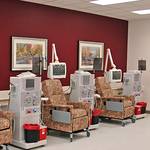 chronic kidney disease education, and renal diet assistance.
Your client DaVita owns and operates a chain of kidney dialysis centers. Dialysis is a process where patients whose kidneys are not working normally are connected to a machine; their blood is cleaned and then put back into their body. Patients who need this procedure have serious health problems and once they require dialysis, they need it 3 times a week for the rest of their life. Your client DaVita has 1/3 of the market and there is one major competitor that has 1/3 of the market share. The remaining market is made up of independent doctors that own/operate their own small dialysis center. Your client DaVita has grown through acquisition of smaller operations and now the market is at equilibrium (i.e. there are no other acquisition options). They’ve asked you to help them grow their profits. What would you do?
Possible Answer:
1. Suggested Framework
a. Company strategy / differentiation from competitors
b. Revenue streams
c. Costs
* Major costs
* Cost reduction opportunities
* Benchmark versus competitors
d. Growth options
* Expand services
* Increase prices
* Capture more market share
2. Additional Information to Share (if prompted):
a. Treatment centers – Because many hospitals don’t have dialysis facilities, hospital doctors and specialists must refer patients to an outside treatment facility (i.e. our client, our major competitor or one of the independent treatment centers).
b. Doctors – When graduating from medical school, kidney doctors can go work for a hospital, become a specialist, or they can open their own independent dialysis and treatment practice (much like a dentist does).
c. Referrals – Patients are referred to a dialysis treatment center by their doctor. Because people don’t know one center from another, they go where their doctor tells them to go.
d. Costs – Fixed costs are $300K/year, variable costs are $45K per year.
e. Revenues – Medicare pays $300/treatment, private insurance pays $3000/treatment.
f. Patients (“product mix”) – 90% of patients have Medicare, 10% have private insurance.
3. Summary of Key Insights
* The key to this case is that there are two types of patients: Medicare and private. Medicare patients are not profitable so the company should focus on attracting as many privately insured individuals as possible in order to grow their profits.
* Doctors are the gatekeepers for dialysis centers and must be targeted.
* Make sure that interviewee walks through revenues, costs, profit analysis (breakevens), and strategies for growth.
4. Walkthrough of Solution
a. Costs
* Ask what the major cost items are: building leases, equipment (dialysis machines), labor (nurses, technicians), supplies and materials (drugs, needles), promotions.
* Fixed costs are $300K/year
* Variable costs include the drugs sold to patients and amount to $45K per year
* Things to mention if asked: the building and machines are already leased, wages are generally competitive. Overall, our costs are lower than our competition.
b. Revenue
* Medicare pays $300 per treatment
* Private insurance pays $3000 per treatment
* Prices are determined by the market, so the company has little control over influencing price.
c. Patients
* 90% of patients have Medicare, 10% have private insurance.
d. Profitability
Each patients receive 52 weeks x 3 treatments/week = 156 treatments per year
Medicare patient:
* Each Medicare patient provides 156 x $300 = $46,800 in revenue;
* Variable costs = $45K;
* Profit = $46,800 — $45,000 = $1,800 / year
Private insured patient:
* Each privately insured patient provides 156 x $3,000 = $468,000 in revenue;
* Variable costs = $45K;
* Profit = $468,800 — $45,000 = $423,000 in profit per year (enough to pay for the annual fixed costs of the entire dialysis center $300K/year)
Once the candidate realizes that one privately insured person covers the yearly expenses of the entire operation, ask them how many Medicare patients a center would have to treat to cover their fixed costs: $300,000 / $1,800 = 167 patients
Note: this section could have been solved using breakevens directly (167 patients for Medicare, 1 patient for privately insured).
At this point, ask the candidate what they think our client can do to increase the chances that doctors will refer privately insured patients to us instead of our competitors.
Possible Solution:
* Market our centers to doctors who have private patients (using data from geographic area, demographics, hospital information).
* Because privately insured people are more likely to be wealthy, improve the facility to make it feel more like a spa so that we can differentiate our treatment centers from the competition.
* Look into launching a marketing campaign to build brand awareness so that patients will go to their doctors asking to be referred to our centers.
* Build relationships as soon as doctors graduate from school so they have a loyalty to our client.
* Work out an incentive structure where doctors are rewarded for referring patients (if that’s legal).