Sonic Drive-In to Launch Pilot Restaurants with Seating Areas
Case Type: growth; improve profitability; math problem.
Consulting Firm: McKinsey & Company 2nd round full time job interview.
Industry Coverage: restaurant & food service.
Case Interview Question #00890: Sonic Corp., more commonly known as Sonic Drive-In or simply just Sonic, is an American drive-in fast-food restaurant chain based in Oklahoma City, Oklahoma. The chain has over 3,000 stores in the United States, mostly concentrated in the South. Sonic restaurants are 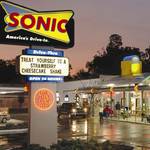 structured as old-fashioned drive-ins: each store has 20 to 30 drive-in spots where patrons can order and receive their food while seated in their cars. The stores have no seating areas. The menu at Sonic’s menu can be broken down into 3 categories:
(1) Main courses: Burger, fried chicken, corn dogs, chili dogs and toaster sandwiches, etc.
(2) Sodas: Over 300 varieties, some of which are proprietary.
(3) Desserts: Milkshakes and other ice cream desserts.
During the first 20 years of its operations, Sonic’s business grew steadily. Last year, however, Sonic’s business declined significantly. Their CEO has hired McKinsey to determine a growth strategy for the business.
Possible Answer:
Interviewer: Given this information, brainstorm some initial ideas on a growth strategy for the client.
Candidate: I would look first at the big picture of store placement and profitability. Next, consider the option of opening more stores, closing unprofitable stores, or adopting a franchise model.
Next, analyze the revenue and cost sides of the business.
Under revenue we could look at growing the customer base, or targeting the most profitable customers. For products, you could look at their product pricing, product mix, and differentiation. My first impression is that having more than 300 kinds of sodas is a bit too much and will cost the business in terms of distribution and inventory costs. We should definitely do some consumer research and see what items in each category the customers really want and what differentiates the brand from other chains.
In terms of costs, Sonic should look at their fixed and variable costs. The first thing I would want to look at is the cost of raw materials. This company has such a high variety of products offered at each restaurant; I’m wondering how much they are spending for food and drinks? Also, with all of these sodas distribution costs may be high with multiple suppliers. Storage costs may be high given the product mix.
I’m also curious about competition. How are stores doing in high-density areas with lots of competition, versus areas with low competition?
Interviewer: Okay, these are some great ideas. Let’s move on. The client Sonic has also launched some pilot restaurants that have seating areas. I have some data on the performance of these pilot stores as compared to the standard stores (show the candidate the following charts).
Chart 1. Standard Restaurants
| Category | Price | Quantity Sold | Profit Margin |
| Burgers etc. | $2.00 | 15,000 | 15% |
| Sodas | $2.00 | 10,000 | 10% |
| Milkshakes | $4.00 | 5,000 | 20% |
Chart 2. Pilot Restaurants
| Category | Price | Quantity Sold | Profit Margin |
| Burgers etc. | $2.00 | 25,000 | 15% |
| Sodas | $2.00 | 15,000 | 10% |
| Milkshakes | $4.50 | 10,000 | 25% |
Interviewer: What are some of your initial impressions of this data? Can you talk about some of the benefits and drawbacks to the pilot model?
Candidate: Immediately I see that the price for milkshakes has increased along with the margin for milkshakes, while sales have doubled. This is interesting. Doubling sales while putting an item at a higher price point is a great move – I’m wondering if Sonic’s standard restaurant has room to increase their price or if something about the store format is increasing milkshake sales.
Thinking about the buying process in the pilot stores, perhaps people buy their food and a soda first, and then go up to the register again and buy a milkshake. Since they are sitting around enjoying their food with their family, they then have the option of buying a round of milkshakes for everyone (if they aren’t completely full). In the standard store format, people might just have one transaction and drive away while they are still eating, so they are already home when they decide they want a milkshake.
It is interesting the pilot stores don’t have higher prices for main course food and sodas. This data suggests that they might have some mark-up potential. This is a possible revenue strategy. Also, these pilot restaurants are doing a higher volume overall. We might want to explore the opening of more pilot restaurants or converting some stand locations to this model.
Interviewer: Okay, let’s get into some calculations on the standard restaurant model. The client Sonic thinks their milkshake business has a lot of potential. They are wondering how many soda sales they would have to convert to milkshake sales at an average store in order to increase their profit margin to 18% total for all sales.
Candidate: Okay, so the client wants to subtract X sodas from 10,000 and add X milkshakes to 5,000 in order to reach a 20% profit margin at an average store. I have to start by figuring out what the profit margin is overall at a store.
Revenue = Price * Quantity
Burgers: $2 x 15,000 = $30,000 @ a profit margin of 15% means that profits are $4,500
Sodas: $2 x 10,000 = $20,000 @ a profit margin of 10% means that profits are $2,000
Milkshakes: $4 x 5,000 = $20,000 @ a profit margin of 20% means that profits are $4,000
Overall revenue = $30,000 + $20,000 + $20,000 = $70,000
Overall profit = $4,500 + $2,000 + $4,000 = $10,500
profit margin = $10,500 / $70,000 = 15%
Looking at the sale of a soda and then of a milkshake:
* Soda: $2.00
* Milkshake: $4.00
* The difference between the 2 sales is $2.00
* Converting X number of Soda to Milkshake will increase the total revenue by X * $2.00
Then, looking at the profit on an individual sale of a soda and then of a milkshake:
* Soda: $2.00 at 10% margin = 20 cents
* Milkshake: $4.00 at 20% margin = 80 cents
* The difference between the 2 profits is 60 cents ($0.60).
* Converting X number of Soda to Milkshake will increase the total profit by X * $0.60
So, letting X = required number of conversions from sodas to milkshakes.
New overall revenue = $70,000 + X * $2.00
New overall profit = $10,500 + X * $0.60
New overall profit margin = ($10,500 + X * $0.60) / ($70,000 + X * $2.00) = 18%
Solving for X, we get X = 8,750
Interviewer: Alright, so summarize your recommendations for the client.
Candidate:
* Recap case: We were hired by Scottie’s to determine a growth strategy for a declining business.
* From the data analyzed, shifting from the standard drive-in model to the pilot model (with seated areas) should boost both revenues and margins per restaurant.
* If we maintained some standard restaurants for reasons of branding nolstagia, we should shift consumer beverage purchases from sodas to milkshakes, to drive up margins further within existing standard restaurants.
* There are also other big-picture strategies we have not yet explored, such as franchising, but please speak to my Director of Client Services if you wish to extend this engagement and keep the team on for another month. (tongue in cheek!)