Pennzoil Builds Strong Presence in Oil Change Business
Case Type: improve profitability.
Consulting Firm: McKinsey & Company final round full time job interview.
Industry Coverage: automotive, motor vehicles; oil, gas & petroleum industry.
Case Interview Question #00840: Your client Pennzoil is a seller of motor oil headquartered in Houston, Texas, United States. Motor oil, engine oil, or engine lubricant is any of various well-developed lubricants that are used for lubrication of internal combustion engines. The motor oil and the oil filter need to be periodically replaced. 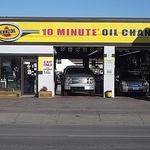 While there is a full industry surrounding regular oil changes and maintenance, an oil change is a fairly simple operation that most car owners can do themselves.
Your client Pennzoil has historically made significant profits, but recently it has come under threat and we have been hired to address three concerns.
1. Over a few previous years consumers believed that they needed to change their oil every 10,000 miles. They have started to realize that in fact they can get away with only changing their oil every 20,000 – 30,000 miles.
2. Historically in the U.S., 80% of the oil change market is in DIY (Do it yourself) and 20% in DIBSE (Do it by someone else). This has started to shift in favor of DIBSE. Our client Pennzoil has a 2nd position in the DIY market but only a 10th position in the DIBSE market.
3. The CEO of Pennzoil has promised his shareholders a 200% increase in profits over the next 5 years.
What do you suggest the client do?
Additional Information: to be provided to candidate after relevant questions
The DIBSE outlets can be broken down as follows:
* 35% of the market is “Quick Lube”, of which 60% is owned by one of our major competitors such as Jiffy Lube.
* 20% of the market is OEM related dealerships.
* 15% is small “mom and Pop” auto shops.
* 10% are small regional chains.
* 5% are owned by Wal-Mart who are entering the oil change market.
Our major DIY customer is Wal-Mart, where we are the price leader.
The margins in DIBSE are half the margins in DIY.
The client Pennzoil expects to charge $25 for an oil change and the variable costs for an oil change is $20.
Each DIBSE garage has three bays. Each car oil change takes about 15 minutes. Car owners drive their cars themselves onto the bay.
Additional data for DIBSE market entry:
Fixed Costs
* Marketing: $45,000
* Rental of garage: $36,000
* Equipment: $15,000
* Utilities: $14,000
* Fixed Labor (ask how much they expect): 5 mechanics at $40,000 each
Possible Solution:
Note to Interviewer: Push the candidate not to draw a framework. Just outline and discuss the issues.
Candidate: First, I would like to explore partnering with Wal-Mart to sell to their DIBSE business.
Interviewer: Why would Wal-Mart want to source from us?
Candidate: I think we can leverage our relationship to Wal-Mart, pointing out that people are buying our product in the DIY segment because of our value proposition, our brand name and their trust in us. We will continue to advertise our product and people are going to ask after it. Secondly as WalMart is new to the DIBSE business — and this is not necessarily a logical progression for them — using a premium lubricant in their garages will help inspire confidence.
Interviewer: How would you structure a deal to protect your margins in the DIY business?
Candidate: I think we should be able to negotiate either a volume agreement, or a supply location agreement to protect our DIY business.
Interviewer: OK, what else?
Candidate: I think we should look at tying up a deal with the OEM garages, by focusing on the OEM producers and advertising with them we can link our brand to their cars.
Interviewer: That is not going to work. In the US each OEM garage has the right to sell what cars he wants to and to use whatever lubricants he wants in his garage. The OEMs have no power over the individual garages.
Candidate: OK, in which case we will need to use our brand presence in the DIY segment to create a pull effect onto the garages. For example we can co-advertise at auto shows such as the Detroit Auto show to create demand for our lubricants when they get their new, expensive, cars oil changed. This will create an incentive for individual garages to stock our product.
Interviewer: Good. Now the client has been thinking about vertically integrating into the DIBSE business. Do you think that is a good idea?
Candidate: It will depend on how much margin is available in that business, how easily we are able to cross sell to our existing customers and whether there are any synergies with our existing business.
Interviewer: The client expects to charge $25 for an oil change and the variable costs for an oil change is $20. Each DIBSE garage has three bays. Each car oil change takes about 15 minutes. Car owners drive their cars themselves onto the bay.
And we have the following data on the fixed costs associated with the DIBSE business:
- Marketing: $45,000
- Rental: $36,000
- Equipment: $15,000
- Utilities: $14,000
- Fixed Labor (ask how much they expect): 5 mechanics at $40,000 each
Candidate: In that case, the variable contribution per car oil change is $5. The total fixed cost is $310,000. Hence we need to process $310,000/$5 = 62,000 cars per year to break even. Assuming we are open 300 days a year, we need to process around 200 cars per day to break even.
200 cars per day — assuming a 10-hour working day, means that we need to process 20 cars per hour. Because each garage has three bays and oil change takes about 15 minutes, our capacity is only 3 * (60/15) = 12 cars per hour.
Hence, this does not make sense.
Interviewer: So, what do you suggest?
Candidate: Well, what we could do is to see whether we can use this opportunity to cross sell other products to the car owners while they are at our garage for oil change.
Interviewer: Good. If we go with that strategy, our price will go up to $48 and our variable costs will increase to $28, but it will take 45 minutes to process each car.
Candidate: OK, so our variable contribution has now increased to $20, which is 4 times higher than our previous case. Hence the number of cars we need to process to break even will drop to around 5 cars per hour per garage. Our capacity has, however, also dropped to around 3 * (60/45) = 4 cars per hour per garage, hence we still can not break even.
Interviewer: Good. You just bump into the CEO of Pennzoil in the lift, he asks you for a summary update, what do you say?
Candidate: The reason you are loosing profits is a shift in the industry from DIY to DIBSE. We believe we can capture some market share in DIBSE through a partnership deal with Wal-Mart, and have investigated the possibility of vertically integrating into the DIBSE garage industry — but do not currently believe that the returns justify the investments.
Over the next couple of weeks, my team is going to work further to identify further opportunities to use your strong brand name to build your presence in the DIBSE segment.
Interviewer: Excellent!