South Beauty Restaurant Converts Open Seating into Small Rooms
Case Type: improve profitability; math problem.
Consulting Firm: McKinsey & Company final round full time job interview.
Industry Coverage: restaurant & food service.
Case Interview Question #00763: Our client South Beauty 881 is an upscale Chinese restaurant located in the city of Shanghai. The restaurant mostly serves government officials and high-level business customers. Its monthly revenue is RMB 1.2 Million Yuan, but profit is not very high. The manager of South 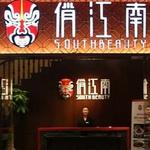 Beauty 881 recently hired McKinsey & Company to help them increase profits. How would you go about this case? What recommendation would you give to the client?
Additional Information: (to be provided upon request)
As China’s economy is booming, the upscale dining market is growing at 20% every year.
Customers for high end dining are generally price insensitive.
All competitors are earning money. Competitors’ price and value proposition are similar.
Variable costs across industry is 50% of revenue. Assume there are no fixed costs.
On weekdays, there is always a line of customers waiting for individual rooms at dinner time. As a result, the South Beauty 881 restaurant has to turn away half of its weekdays dinner customers due to capacity constraint.
The client South Beauty 881 has two kinds of seating in their dining area: 10 small private rooms with 2 tables per room, one big room with 20 tables.
a. Individual Room: 20 tables
| Week Day | Weekend | |
| Lunch | Occupancy: 80%; Price per person: 150; Party size per table: 4 | Occupancy: 30%; Price per person: 100; Party size per table: 4 |
| Dinner | Occupancy: 100%; Price per person: 300; Party size per table: 6 | Occupancy: 50%; Price per person: 200; Party size per table: 6 |
b. Big Room: 20 tables
| Week Day | Weekend | |
| Lunch | Occupancy: 20%; Price per person: 100; Party size per table: 4 | Occupancy: 30%; Price per person: 100; Party size per table: 4 |
| Dinner | Occupancy: 30%; Price per person: 200; Party size per table: 4 | Occupancy: 30%; Price per person: 200; Party size per table: 4 |
Question #1: What do you think are the possible reasons for the client’s low profits?
Possible Answer:
The main reason for the client’s low profits: Government officials and high end business customers prefer individual rooms to big room seating because of their requirement for privacy. Currently our client is not meeting customer demand.
Question #2: What are potential solutions for this situation?
Possible Answer:
- Raising price.
- Turning big room tables into individual private rooms.
Question #3: Through market research, we have determined that if we raise weekday individual private room price by 33%, we will lose 10% of customers. How will it change our profitability?
Possible Answer:
For weekday lunch, raising the price will result in 10% customer loss.
| Previous | Now | |
| Customer | 4 x 20 x 80% = 64 | 64 x (1 – 10%) = 58 |
| Price | 150 | 150 x (1 + 33%) = 200 |
| Revenue | 64 x 150 = 9,600 | 58 x 200 = 11,600 |
| Profit | 9,600 x 50% = 4,800 | 11,600 x 50% = 5,800 |
| Incremental Profit | 5,800 — 4,800 = 1,000 |
For weekday dinner, the underlying demand is 200% of current capacity, so raising price won’t reduce volume.
| Previous | Now | |
| Customer | 6 x 20 = 120 | 120 |
| Price | 300 | 300 x (1 + 33%) = 400 |
| Revenue | 120 x 300 = 36,000 | 120 x 400 = 48,000 |
| Profit | 36,000 x 50% = 18,000 | 48,000 x 50% = 24,000 |
| Incremental Profit | 24,000 — 18,000 = 6,000 |
Total Daily Incremental Profit: 1,000 + 6,000 = 7,000 Yuan
Question #4: A second solution is converting half of the big room into 5 individual rooms. It will take 2 weeks for the restaurant to finish the decoration, during which time the restaurant has to be completely shut down. The decoration will cost RMB 100K Yuan. What is the total cost of this project?
Possible Answer:
Costs
- Capital investment: 100K
- Opportunity Cost: ~300K** (2 weeks of profits = 1.2Million/4 weeks * 2 weeks * 50%)
** Note: The observant candidate will quickly calculate this from the initial revenue info given at beginning of case rather than making heavy calculations involved with calculating it from the table of data.
Total Costs = 100K + 300K = 400K Yuan